Down the Tube: A History of Short YouTube Horror Films
Pressing play on the history of the signature YouTube horror short.
“Hey, come watch this!”
It’s an innocent demand that probably came from your sibling, maybe a cousin, or a friend. Maybe they sat at the family’s desktop in the computer room (back when those were still a thing). Or maybe they said it while holding an iPod Touch or iPad for the first time. The siren song of a shared viewing experience on shiny, new technology pulls you in. You sidle up to your sibling or cousin or friend. You look over their shoulder anxiously awaiting what treasure they’ve managed to uncover. You take in the screen, the image of sprawling hills and a sunny day. But it’s not just a picture, no. It’s a video of a car driving along a winding path, the scenic route for sure. Maybe the camera will pan out to something more lush or something funny will happen soon. It’s got to, right? Why else call you over? You’re looking closely, really, really zoned in on this video. Trying to find the very detail that made someone else demand you see it.
That’s when the zombie pops up in the foreground.
Like most kids who grew up with the emergence of technology, I experienced one of my very first jump scares not in a theater, not in a dark living room, and not in any way I was expecting. No, it came from a YouTube video titled “Relaxing Car Drive” that one of my punk older cousins (or maybe friends) showed me at an impressionable age.
Horror thrives on YouTube, a fact that I hadn’t considered much prior to this year despite my first encounters with the genre being on this platform. In recent history this truth has certainly been solidified. Mark Fischbach, better known as Markiplier, the horror video game streamer, created a movie adaptation of the indie horror game Iron Lung to pretty solid success by most accounts. Danny and Michael Philippou had a successful YouTube channel (“Rackaracka”) before they created the 2022 film, Talk to Me, but their videos weren’t necessarily horror. Unless you count a very rageful Ronald McDonald embarking on a violent killing spree in a chicken shop horror, which you might, honestly. Genre is a concept, anyway. Most recently and more on par with our general grasp of the horror genre, Curry Barker’s Obsession and Kane Parson’s Backrooms have dominated the box office and many conversations surrounding the state of horror films in 2026. Maybe this uptick in popularity stems from easily recognizable themes and motifs that we’ve grown accustomed to viewing online. Or maybe original horror is having a moment where not every movie is an installment in a franchise or reboot. Whatever the case, there is no better time to look back on the video sharing platform and its relationship with the genre.
YouTube Horror Shorts: A History Lesson
Fair warning, dear reader. As I talk about each short film that I viewed, I try to stay as spoiler-free as possible. But given that these films are sometimes only two minutes long, staying away from spoilers is a little difficult. So, proceed with caution!
As with a lot of these things that have emerged within pop culture and media, tracing the origins of condensed horror films on YouTube proved to be a little tricky. In a discussion I had with my husband, an avid YouTube watcher, we had both decided that the short form of horror had to start with “Relaxing Car Drive.” We shared a similar bond of being scared half to death by the 20 second clip that was uploaded in 2006 (20 years ago?!). But upon further investigation, the waters of where clips and shorts like this originated gets a little muddy.
“Relaxing Car Drive” was actually a German energy drink ad that was created in 2004 according to some internet forums of somewhat questionable reliability (see Commercials Fandom and Know Your Meme). A lot of Reddit threads have been dedicated to figuring out its origin so it’s safe to say that many folks came to it on YouTube rather than German television.
Maybe this was the start of horror shorts, or maybe my personal anecdote takes up a lot more mental real estate than it should. Whatever the case, I kept digging, trying to figure out where horror shorts got their start in a more official capacity. There was no better place to turn to for guidance than my fellow horror friends, specifically Harry Chilcott, who eagerly presented me with many options on where to start. And as luck would have it, his recommendations nearly perfectly aligned with my own research. What you’re about to read is a combination of my research and these recommendations, how this media form has progressed, and my own reactions to these films.
One of the earliest examples I can find of this dates back to 2009 with No Through Road created by Steven Chamberlain. This is a found footage-style short horror film with a brief text introduction outlining the circumstances of the film before cutting to the video itself. The dark interior of a car captures the sound of four teen boys talking amongst themselves, carrying on, as they drive towards Stevenage, England. It’s normal, mundane teen fodder until the car keeps returning to the same sign, the same tunnel. The radio plays eerie music when it’s finally turned on, and it’s a totally normal situation you would probably find yourself in with your own friends until suddenly, it isn’t. The film cuts to different pieces of videos of the boys goofing around, some of which very eerily mirror the ones I made with my friends at that age, before returning to the unfolding chaos. There’s, of course, a not-so-great ending that I won’t spoil, but the reason No Through Road works so well is because of the video cuts, the blurred motion of a frantic camera operator, and the real texture to the video that we all recognize so clearly.
Also in 2009, Marble Hornets created by Troy Wagner, Joseph DeLage, and Tim Sutton leans into the lore of Slender Man which I do not have the time or space to do a deep dive into, sorry not sorry. This web series includes several video snippet entries of one man’s attempt to understand what exactly an old friend captured on film while working on a scripted feature film. While it was thought the scripted film would be on display, things quickly turn when eerie videos of late night drives, figures on porches, and warped location scoutings are shown instead. I only made it through about five of these clips before I chickened out simply because of how real these seem. Or maybe I’m just a weenie.
Moving into 2010, a series of videos accompanied by text narrative (read the text on the Haunted Cartridge:) known as Ben Drowned was shared by a channel called Jadusable. Things change a bit here as we start really blending media forms with creepypasta-styled story telling to create a very unnerving combination of formats. Essentially, the story shares the details of a young man coming into possession of a Nintendo 64 game called Legend of Zelda: Majora’s Mask that is very, very cursed. The thing about this entry in the canon of horror shorts on YouTube is that the video component is strictly game playthrough. We see strange saved files, really haunting graphics, and bizarre text dialogue that isn’t typical of the Zelda games we know and love. I will say, having not played this particular game, the video component of this disturbing narrative is less effective given that the “wrongness” is less apparent. But it’s creepy all the same, especially within the context of the text narrative.
Jumping to 2013, the emergence of punchier, more surreal horror can be found in Michael Evans’ Smiling Man in which a fairly normal looking dude goes on a walk at night to be confronted with, you guessed it, a smiling man. It seems like an innocent enough idea, but executed correctly by the actors, the Smiling Man’s disjointed movement, weird dancing, and odd stances are just plain unnerving. Simple, effective horror.
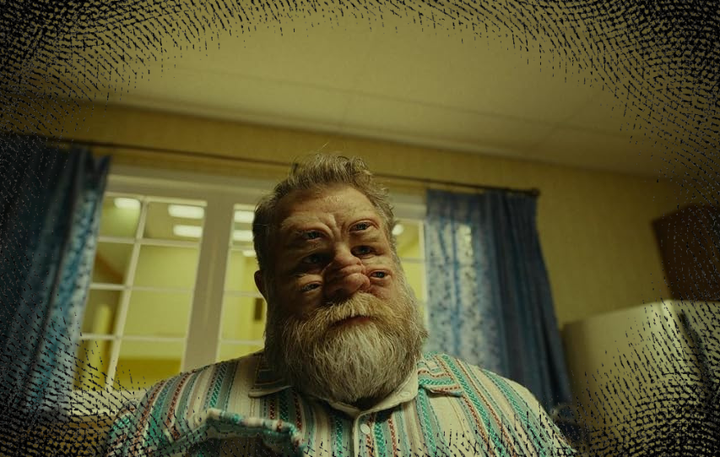
Perhaps one of the most disturbing entries in my research is This House Has People In It, created by Alan Resnik in March of 2016, which freaked me the hell out. This short film went on to become part of Adult Swim’s Infomercial series, but seriously, if I saw this film on my TV screen in between showings of Bob’s Burgers or Aqua Teen Hunger Force, I would firmly believe I lost my mind.
The signature detail of this film is that we are taking everything in through the view of surveillance cameras (HARROWING). Each camera focuses on a “subject” or a family member in a seemingly normal suburban home as the family prepares for their son’s birthday party. That is until their teen daughter gets stuck to the floor and starts to fall through.
And pandemonium ensues.
I’ll be honest, I couldn’t finish watching this one. The screaming, the effects, the quick camera shuffling, the hopelessness. I just couldn’t do it.
Two entries between 2017 and 2019 rely heavily on what is supposed to be shown on television in normal syndication, Local 58 TV (created by Kris Straub) and Gemini Home Entertainment (created by Remy Abode). Each of these channels offers various videos of what seems like normal programming until you watch more than five seconds of footage. Then you realize the weather warnings are about the apocalypse, the nature programming is about the demons living in your walls, and the paid programming that comes on at 2 AM is NOT what you think it is. These are fun and disturbing with plenty of entries to explore at various lengths, maintaining the integral texture of what public service announcements and normal programming should look like.
Moving into the 2020s, we see things grow a little more refined, more cinematic. But one channel in particular relies on the pillars of older media forms: The Mandela Catalog created by Alex Kister in 2021. This entry seems to combine much of what succeeded from its predecessors combining that uncanny valley feel of wrong service announcements, audio transcripts that are utterly disturbing, horrifying surveillance camera footage, and so much more to create a comprehensive plot, tying each video to the next.
We learn that “Alternates” are taking over the human race, what to do if we spot one, and what a cry for help looks and sounds like. The central messaging of this channel feels very much like the advertisements for safety protocols during the Cold War (think Duck and Cover). This is one of the series I want to return to, but once the sun is up.
And to bring us to the present, channels like Alter provide a unique platform for horror shorts on a consistent basis. To get a sample of what kind of films they share, I watched their most popular film, Other Side of the Box directed by Caleb Phillips which has 28.5 million views as of when I watched it last week. This is more of a straight-forward film, no found-footage aspects, but there’s nothing over the top in terms of gore, special effects, or elaborate set-pieces. It’s simply a solid horror story made possible by what happens when your eyes are turned away from the subject matter, rather than staring it down.
Another wonderful thing about Alter’s channel is finding short horror films created by women, as the channel serves as a platform for this medium specifically, listing the directors, creators, and other involved individuals in the video’s notes. Finding short films directed by women felt glaringly absent from my research until I crossed into the 2020s, and I found the Alter channel.
Slut by Chloe Okuno (who also directed Watcher, a personally beloved film from 2022) harkens back to Stephen King (or de Palma’s) Carrie in many ways as we follow one girl’s struggle with her attractiveness while also being made privy to other horrific acts occurring in a small Texas town. This is one of my favorite films that I found with Okuno delivering an excellent, horrifying twist that escalates the stakes of this film into the stratosphere. There’s a lot going on thematically as well with the examination of the normalcy of violence against women.
Another woman-directed YouTube horror short, Lucy’s Tale by Chelsea Lupkin follows one bullied girl as she notices her body changing, namely the growth of a tail. Something that Lupkin taps into with tremendous sincerity is the embarrassment women feel surrounding their own bodies, their lack of understanding and the shame around changing. And much like Slut, the connective DNA to Carrie feels rather robust (this one overtly shows a scene from the film playing in the background), something I will never complain about.
Now that we’re mostly up to speed in our history lesson, I’ll bring things back to where we started - the current success of Backrooms and Obsession. Kane Parsons has another found footage series I immensely enjoyed that fits in nicely with the themes of the original Backrooms titled The Oldest View. Plus, Curry Barker’s previous short films, The Chair and Milk and Serial are available on YouTube as well.
And that brings us to the end of our deep dive into short horror films that have found homes on YouTube within the last 25 years. From jump-scares to found footage and beyond, the history of visual short horror is vast. While I do feel that my research was extensive, platforms like YouTube feel seemingly endless, and any further recommendations are welcome in the comments of this article!
May your sleep be less disturbed than mine after watching these films.
Comments ()