From Faux Pas to Mayhem: Escalating Social Violations in Horror
Etiquette is a social contract providing everyone with words to use and actions to take to comply with general respectful norms. But what happens when that goes out the window?
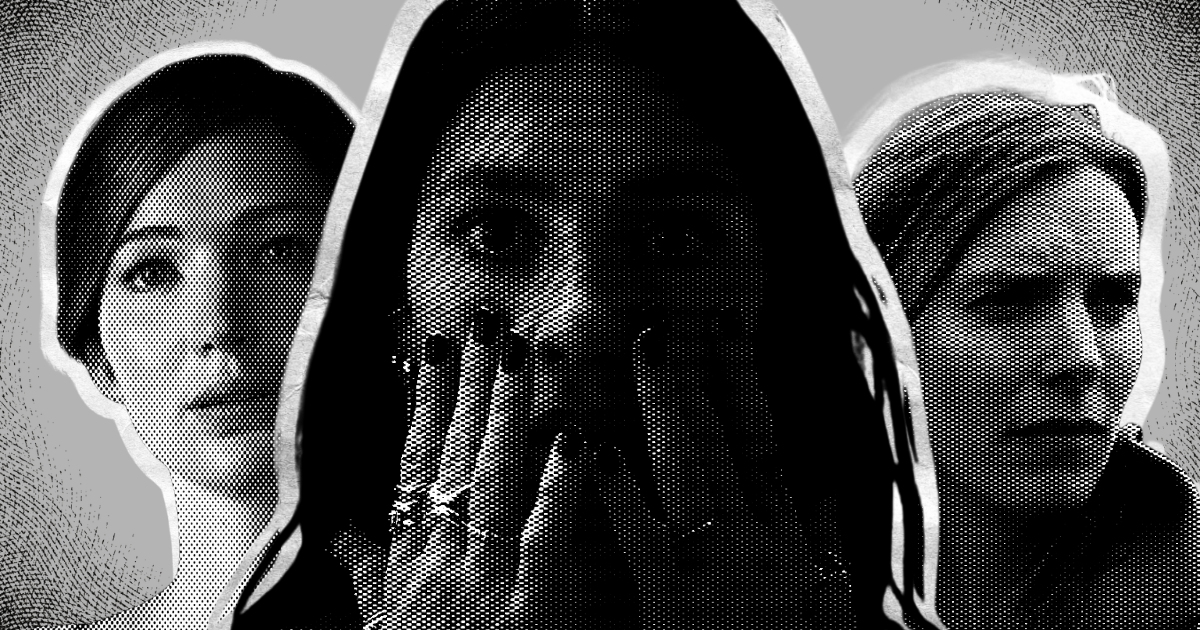
Rachel is getting married in 4 days. She has just met the Cunninghams, her soon-to-be in-laws, and the reception at her fiance’s family home has been chilly at best. Someone has gone through her things and taken her wedding dress. People are whispering about her behind partially-closed doors. There’s a nasty, anonymous note with her name on it. Even when they’re being nice, offering her mother-in-law’s old wedding dress as a backup option, there is something suspicious and predatory about the way the women in her new family circle her, grabbing the dress, putting their hands all over her body without asking.
This is the situation early on in Something Very Bad Is Going to Happen, a recent horror series on Netflix. But if you change a few details, it could easily have been the first act of a comedy of manners, a bouncy little satire all about the silly little dance of social norms. How does Rachel handle her creepy, enigmatic new mother-in-law or the brother-in-law who is constantly bickering with his wife? Don’t forget the weird little nephew who keeps showing up where you don’t expect him.
What is this social awkwardness doing in horror? Maybe it just sounds like The Vibes Are Bad, but I think it’s perfectly at home there. I do not worry much about supernatural forces. Horror movies usually startle me more than scare me. But a story like Rachel’s will unsettle me much more than a typical horror plot. Supernatural horror is imaginary, it is a little sandbox to play in that you can put away when it’s over. Social horror is real life, it is situations I have encountered before and will encounter again. It is memories I wish I could forget and problems I wish I could avoid. It’s the most horrifying horror for me.
Watching Rachel brings up enough of my own memories. I have been introduced to a partner’s family. I have gone to an event with a partner where they are the only person I know and then left by myself. I have been in places where I don’t feel comfortable at all. Watching the show had so many of these real-life relatable horrors that I had to take a break from watching entirely.
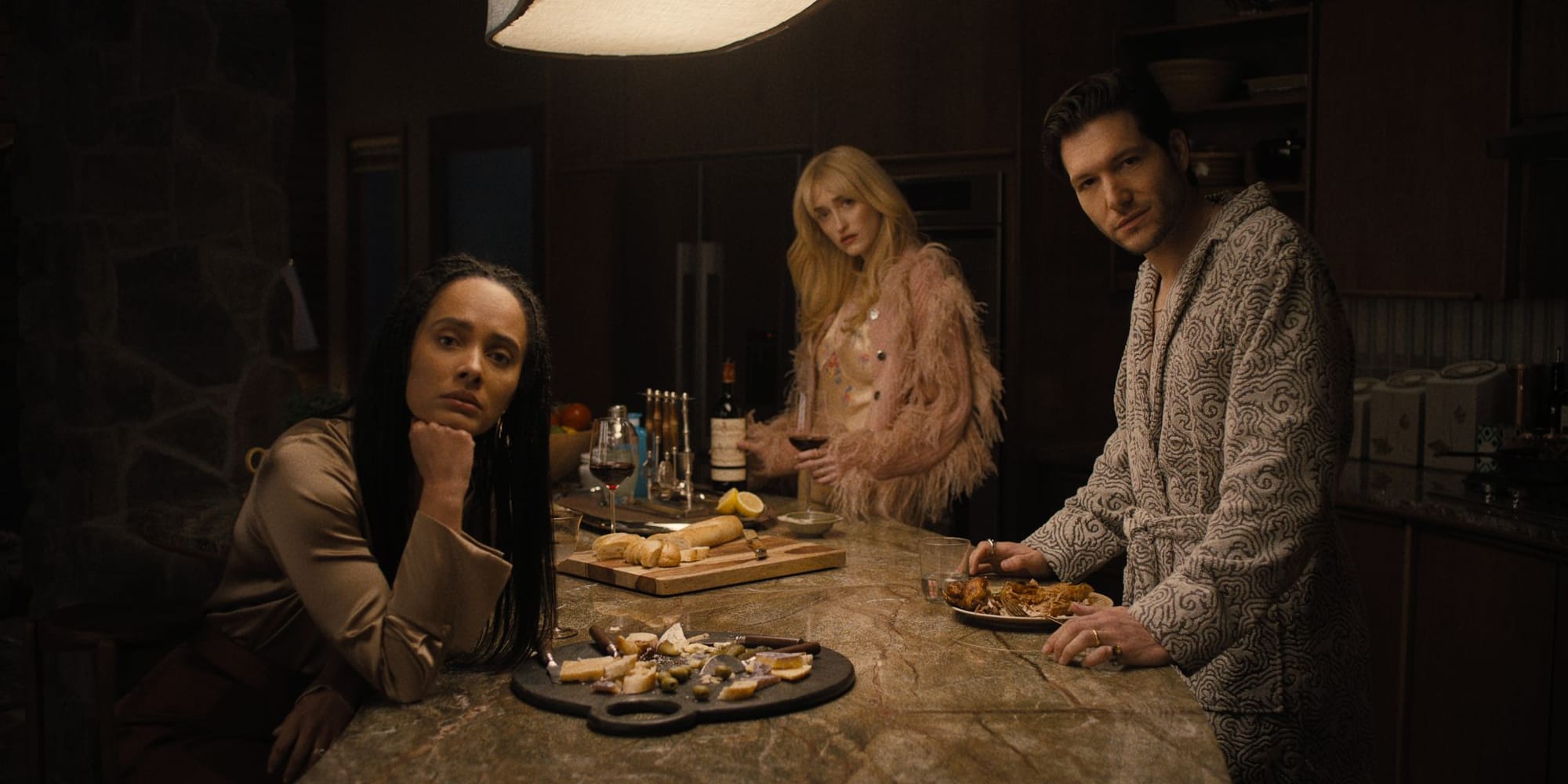
The specifics of Rachel’s story have become a common enough setup in horror that I think we can refer to it as a trope. In this trope we have our protagonist, she is usually a young woman. In Something Very Bad this is Rachel, a beautiful bride but also someone who seems not quite at home in her own skin. She looks tough and worldly-wise, but she also sticks out like a sore thumb in the vacuous luxury of the Cunningham home.
The next ingredient is a romantic partner, in this case Rachel’s fiance Nicky. The partner initially appears to be an ally, but will often make the situation worse either deliberately or accidentally. Nicky apologizes for his family and is aware that they’re not easy to deal with. But he is always absent when Rachel needs something, he doesn’t take any steps to properly introduce her or serve as an intermediary. We can’t always be sure if Nicky is even on Rachel’s side, another typical element of the trope.
The location for all of this can work in two different ways. Whichever one it is, the host/guest relationship is the most important piece of the whole formula. If our protagonist is the host, she is invaded by guests she doesn’t know how to please. If our protagonist is the guest, she is in completely foreign territory where she isn’t sure how to act.
It is this delicate little dance of hosting that requires everyone to rely so heavily on the rules of etiquette, and thus a perfect situation for so many of these social and psychological horrors. Whether you’re host or guest there is an unspoken set of procedures to follow and for our protagonist, a tendency to placate. One social norm violated, you smile and nod and say that’s fine. A few more and patience is wearing thin, everyone is on edge.
The action in this particular type of horror really begins with some kind of social violation. It could be minor rudeness, a little bit of over intrusiveness. Our protagonist lets it go, smiles and tries to act like everything is fine. But this will only be the first of many repeated violations. The protagonist becomes increasingly frustrated and worried, but once she has started to concede she finds herself repeating the same allowances over and over again. At first everyone in Something Very Bad Is Going to Happen is just a little unwelcoming to Rachel, a little weird. But these are the people who will be her family. She has to deal with them for the rest of her life. Rachel tells herself to just suck it up and say everything is fine. It’s only a few days, after all. Each new slight gets yet another fake smile.
The final element is the strangest. Because after all of this tension building, what happens is basically nothing. Ultimately this series of escalations will not lead us to anything. Instead it will get swept aside while the “real plot” takes place.
After a couple hours of watching the Cunninghams put Rachel through the wringer I didn’t think I could watch any more. I stopped watching the show for a few weeks and wasn’t sure I would ever come back to it. Then when I finally did, I discovered I had quit right as the ground shifted. It turns out all this family dysfunction was just another way to build tension and discomfort, and the more the main plot started to kick in, the more the Cunninghams pulled back from controlling and obnoxious to merely eccentric. Eventually they even become somewhat sympathetic characters who are (mostly) on Rachel’s side. By the time the real Something Very Bad kicked in, I was much more relaxed, watching people bleed from their eyeballs without batting an eye.
I call this trope “I’m a Girl and Everyone Is Being Mean to Me.” I’ve given it this name sort of as a joke (like so many of the things I name) but it’s also purposeful. The cutesy-ness of the name is a way to trivialize it, which is not all that dissimilar from the gaslighting the Protagonist experiences. Everyone insists that there is no problem, everything’s fine, there is nothing to be worried about.
The use of the word Girl is also purposeful. While this protagonist is often a young woman, “Girl” makes me think of being infantilized, patronized, feminized. It evokes being treated like a little girl who isn’t capable of making her own decisions, who can’t possibly know what is best for her. No one listens to you, no one takes you seriously. It is what happens in my actual nightmares.
The film mother! (2017) uses this trope for its entire first act. Mother, played by Jennifer Lawrence, is at home with her much-older husband, played by Javier Bardem. He is an artist of the temperamental genius variety. Her home, it is repeatedly emphasized, is a labor of love she has spent much time and labor fixing up. It is large and beautiful, though it is still a work in progress. It seems that Mother’s only purpose is to please her partner and work on her home. The home is invaded by a strange man. Bardem lets the man in against Mother’s wishes, and soon he has been joined by his wife and then eventually by their two grown sons. Mother puts up with these slights at first, but soon it is not just her space that has been invaded, it’s her peace and the most intimate details of her personal life. (Michelle Pfeiffer’s invading woman criticizes Mother’s underwear and always wants to give her sex advice.) The whole thing devolves into a physical fight that kills one of the sons. But Mother’s shock and confusion is all swept aside. The guests leave, her partner insists that everything is fine now, and there’s even a full act break moving us several months forward to leave the whole thing in the past.
The first 30 minutes or so of mother! were classic I’m a Girl and Everyone Is Being Mean to Me territory, an exercise in cringe where people keep showing up and her terrible husband keeps inviting them in and no one listens to her and everyone makes a mess and she is clearly about to lose her goddamn mind and so was I. I was almost relieved when a literal war broke out in the dining room because it was preferable to watching Michelle Pfeiffer break things.
Another recent example is We Used to Live Here by Marcus Kliewer. In this novel a family shows up on Eve’s doorstep wanting to walk around the house she and her girlfriend just bought. The dad says he grew up there, he wants to show it to his kids. Eve, a people pleaser, already struggles to draw boundaries and wants to say no only to cave at the last minute. By the time her girlfriend Charlie shows up, these visitors have already gotten out of Eve’s control. Well they can’t leave now because little Jenny has wandered into the basement and no one can seem to find her. Charlie acts as foil to Eve’s passivity, as these duos so often do, she invites the family to dinner, breezily insisting it will be no trouble. Charlie is following the host script, not realizing how much is already off.
When Eve finally insists on a moment alone with Charlie, she can’t quite bring herself to bring up all the ways she feels uneasy about their guests. Charlie is a better ally than Nicky, once they are alone she quickly realizes that Eve is struggling to set boundaries. Charlie sees an opportunity to provide backup and be the bad guy. ‘“Do you want me to boot them out right now?”’ she says. But Eve once again backs down.
We Used to Live Here really leans into the intricacies of Eve’s anxiety, with an up close look at every little thought spiral in her head as she tries to figure out how to balance her doormat-ish tendencies with her desire to be a stronger person. Eve and Charlie’s healthy relationship has them on firmer footing than Mother or Rachel, but ultimately all of this social tension will once again be swept aside because this is actually a haunted house story with a big helping of cosmic horror. The way Eve questions herself will only get worse once she starts seeing things that couldn’t possibly be there. It’s a smart way to use the social elements at the beginning as a consistent thread throughout the ultimate supernatural goals of the story.
There is one exception to the formula that stood out to me immediately: Speak No Evil, the 2022 Danish horror film. (Not the American remake, which makes several changes.) Generally recognized as one of the most horrific and bleak films of the last decade, it takes the I’m a Girl and Everyone Is Being Mean to Me dynamic and pushes it to the extreme.
We have all the elements here: Louise is a nice, normal mother and wife. Bjørn is her husband who initially seems supportive but always seems to side against Louise when things are difficult. Patrick and Karin are their new vacation friends who become their hosts at their home in Holland. Patrick starts out as a little too boisterous but soon he has aggravated Louise to the point that she is ready to pack it up and go.
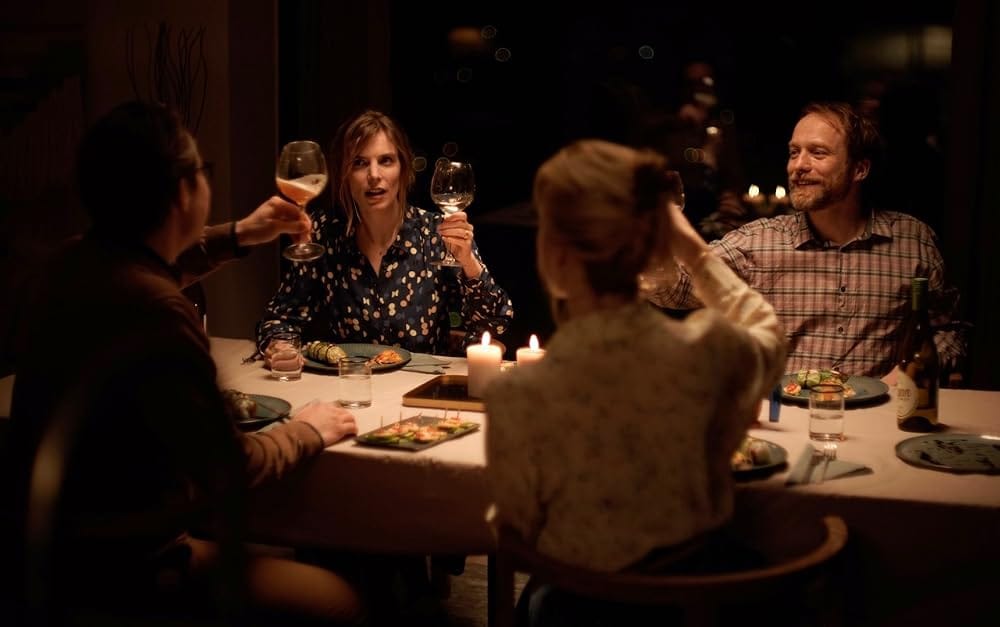
What is different here is that we never have the last piece where these social escalations are merely a tension-building device. Here the social escalations are the point.
Once Patrick has proved that Louise and Bjørn will accept each new degradation, there is a worse one to follow. We don’t need a ghost or a curse, what is so terrifying is watching Patrick gradually create a new order where he is dominant and Bjørn and Louise submit to his will. Once this dynamic is established, how far would someone go? If there is enough malice for simple acts of disrespect, where will they draw the line? In Speak No Evil there is no line. We see Patrick commit heinous acts of violence and ultimately murder. For him, the script of good manners is nothing more than a game, one where his victims allow him to break the rules over and over again and accept it.
Etiquette is a social contract providing everyone with words to use and actions to take to comply with general respectful norms. But the thing about violating those norms, as we see so often in the real world, is that once someone has violated them, the rules of etiquette fly out the window. When someone is rude, you as the polite person no longer have a script to follow. Even if you ask Miss Manners, she’ll say that if you point out or try to correct rude behavior in others you are also being rude and so are no better than they are.
To come full circle, at one point in Something Very Bad Is Going to Happen, Rachel becomes convinced that her new in-laws are planning to use her as some kind of blood sacrifice. She is ready to bolt. Of course, this is when Nicky finally reappears. Everyone is shocked by Rachel’s reaction, how could she possibly assume such a thing? No one has threatened her in any way. They’ve brought her into their home, haven’t they? But none of this tension would be tension at all if there wasn’t some little question in the back of your mind. If these little lapses in manners couldn’t be a sign of something much worse to come.
I think the biggest problem with this trope is the way it is so often a red herring rather than the real center of the psychological horror the protagonist endures. When it’s just prelude, a way to raise the tension without giving away any reveals too early, it leaves so much opportunity to explore the frailty of our social order unexamined. I would love to see more horror stories make social lapses their own real and legitimate source of lasting terror.
Comments ()