Be Gay, Fight Monsters: Horror Shows to Help You Battle Your Inner and Outer Homophobic Demons
These shows had me on my knees, face inches from the TV, pulled in, and so close that I couldn’t distinguish what was happening in my young soul from what was happening on the television.
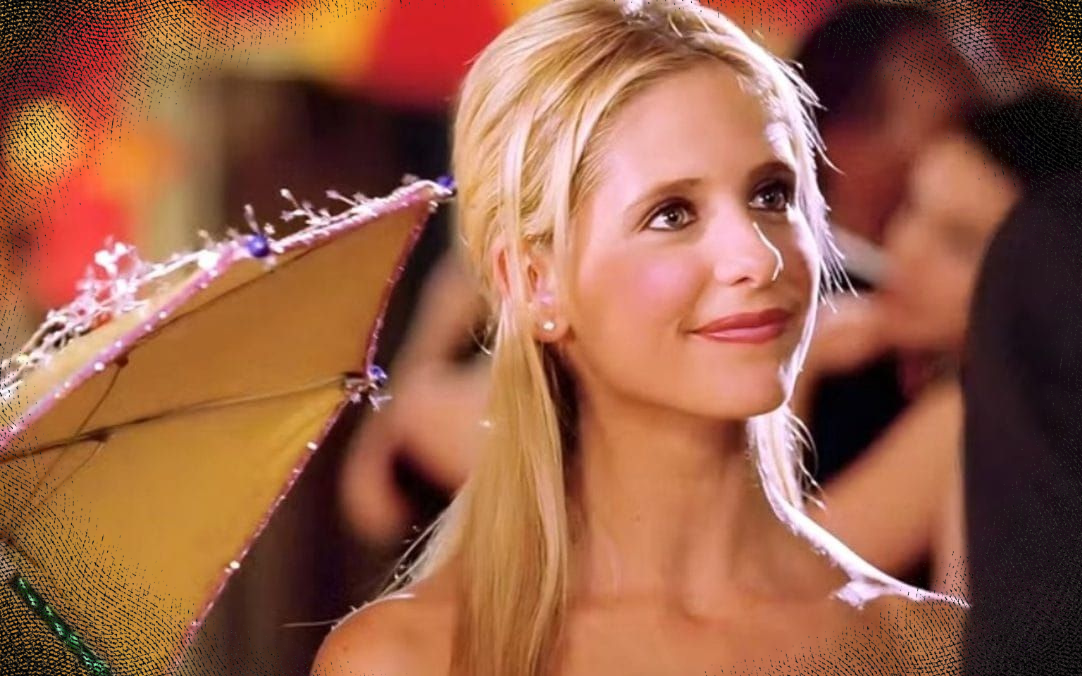
There are two things you should know about me before we get into things: I am a 90s kid and I am very queer. That means that like for many queer millennials, the 90s and early 2000s were a very gay time for me—and I was just a pre-pubescent. I didn’t have the words when I was 5 or 3 or 8 to describe some of the moments and incidents that cropped up in my life, but I did have television.
I naturally gravitated toward horror TV shows because they were the most exciting ones on TV. They had monsters and mythology and humor and ghosts and friendship and big themes about life nestled into 30–45-minute episodes that opened my small child brain to concepts, ideas, stories, and words.
I don’t think it’s possible to make or turn someone gay, queer, or trans who doesn’t already have the magic potion X inside of them. For me, it was seeing the right set of shows with dark, hot, and terrifying characters when I was at the right age to be dealing with my own dark, hot, and terrifying desires that helped me find the very chaotic bisexual panwilderbeast inside of me and not jump to killing it the moment I was able to recognize what it was. What these shows did was give me the language, the magic, and the hunting kit to confront something that the world had communicated to me in so many ways was dangerous, bad, and, at best, comical.
These shows had me on my knees, face inches from the TV, pulled in, and so close that I couldn’t distinguish what was happening in my young soul from what was happening on the television. And that’s what good horror TV can do–remember how it felt watching that first season of Stranger Things?
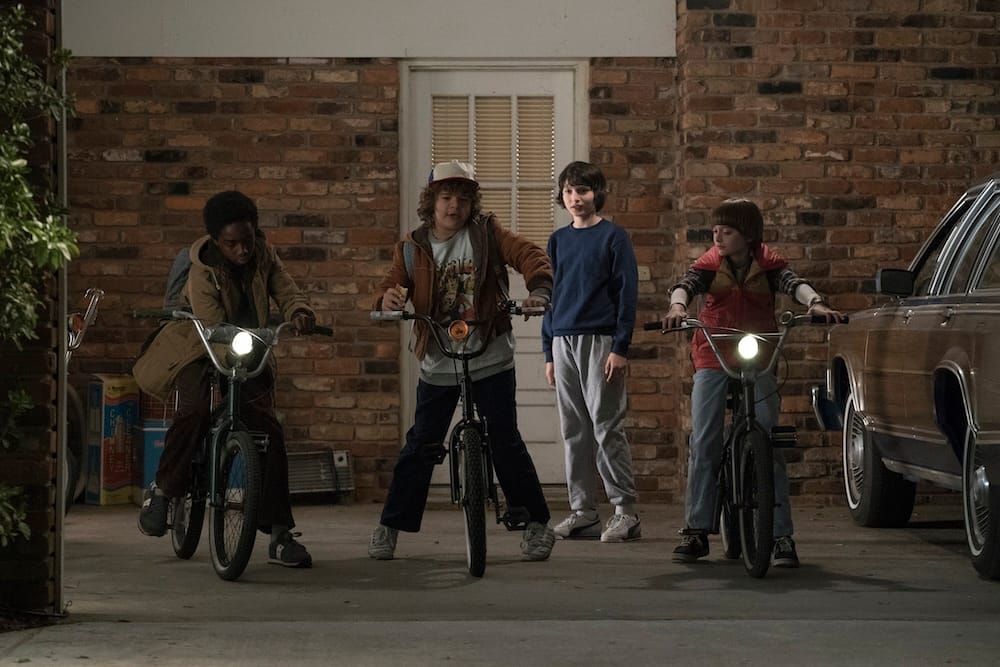
My queer horror TV awakening came decades before the Duffer Brothers stole our hearts, eyes, and ears. It was mid-spring 2003 and the world was coming to an end…
In Sunnydale, California, that is. In the real world a change was coming and happening, and it was anything but an end.
On May 6th, 2003, Season 7 Episode 20 of Buffy the Vampire Slayer, “Touched,” aired and viewers got to see two women—two lesbians in a relationship—having sex for the first time on American network TV. Amid everything going on in the world at that time (war, genocides, weapons of mass destruction, and low-rise jeans), I remember exactly where I was when those two characters, Willow and Kennedy, reached the point of trust, love, and security to have that type of physical intimacy.
I was 12 and had been a die-hard Buffy fan for years. This wasn’t the first time I had encountered gay sex on the show. Most fans will remember Willow and Tara’s ‘Under Your Spell’ musical scene in S06E07 as a very typical gay television network sex scene—the chorus to the duet is “You make me com-plete, you make me com-plete” with ‘com’ becoming more and more elongated as the song goes on. The two women fall back into their bed, Willow crawling down Tara’s body with a devilish grin, and Tara floating as she sings about comi—being completed. The reason that this scene is not listed as the first lesbian sex scene is because there is nothing inherently sexual going on there is just a lot of illusions and hints with no real direct intimacy.
What happened that night on TV was the first time that the lesbian intimacy wasn’t hidden or turned hard into metaphor. With the introduction of Kennedy onto Buffy the Vampire Slayer, the lesbian physical intimacy stopped being solely innuendo and started becoming sensual. There were moments where we’d see the two simply making out, being flirty, and owning their queer hotness.
As Kennedy says in ‘The Killer in Me,’ “The fun part is the process of getting to know a girl. It’s like flirting in code. It’s using body language and laughing at the right jokes and—and looking into her eyes and knowing she’s still whispering to you, even when she’s not saying a word. And that sense that if you can just touch her just once everything will be OK for both of you. That’s how you can tell.”
And that line is what really made me gay in that it made sense to me. I understood what Kennedy was saying on an unspeakable level. I didn’t know why I got it. It was just that hearing those words made my body react like I had encountered a nightmarish beast nestled between my skin and skeleton. And the monster was kinda hot. Then the sex scene happened. I saw it in my bed at night with no one around but the shadow that had always been there. Now, I could start looking at it.
While the gay sex scene between Kennedy and Willow is iconic, what is more iconic was Kennedy herself, played by Iyari Limon. Kennedy is an openly gay woman of color on the show who is proud of who she is. She isn’t portrayed as tortured about her attraction to the same gender. Her storyline isn’t about her trying to come out. It’s about her saving the world, kicking ass, and falling in love (or deep like) with another badass woman.
Willow and Kennedy’s 2003 sex scene is an important moment, not just for horror, but for television. While there have been gay characters in horror movies and books since 1870’s Carmilla, gay characters in horror television are relatively recent—like within the past 30 years. The 90s were the start of more queer representation on television in general with shows like Will and Grace, Ellen, and the British Queer as Folk. For a long time, the way queer intimacy was portrayed in many of these early 90s shows was in an off screen and shielded way—shout out to South of Nowhere and their hilarious G-rated sex scene of two girls holding hands while straddling.
But I didn’t watch shows like that until I was a teenager. As a child, I watched shows like So Weird, Supernatural, Charmed, and, of course, Buffy the Vampire Slayer. Those shows helped shape the queer woman who is writing this because some of those shows have gay characters, gay undertones, but mainly because they show brave characters standing up against a world built to make them think they are crazy, wrong, or bad in some way when all they are trying to do is survive and help others do the same.
It does not surprise me that the shows that made me gay are all ones about people who save people and hunt things. It’s the gay family business. Have you ever wondered why so many activists and protestors and do-gooders are gay? It’s because we know what it means to suffer. To be cut out. To be made into an outcast and cast aside by families, friends, and the world. It’s a pain we don’t wish on others. A pain we try our damndest to fight no matter the form it takes.
Buffy and her Scooby gang were not the first monster fighters I had encountered. That right belongs to Fiona from So Weird (even now as I type her name, I can hear that memorable sound of her mother calling out to bring her back from her spirit-talking adventures).
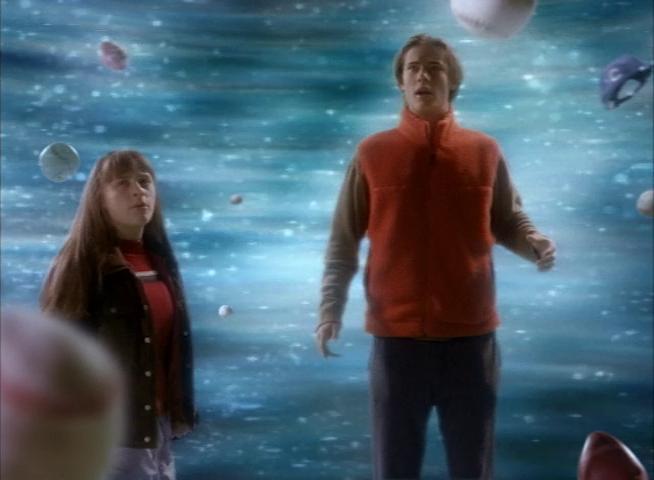
So Weird was a Disney channel show that aired from 1999 to 2001. It was like a dream to me when I first saw it. I had watched Goosebumps, Are You Afraid of the Dark?, and Eerie, Indiana, and any other kid horror show I could find. What made So Weird unique at the time was that it featured a young girl as the main character who was obsessed with the paranormal and even connected to it. She wasn’t a sidekick or someone just tagging along. She heard ghosts, saw spirits. The other world was constantly reaching out to her and pulling her into strange and scary scenarios that she faced head-on because she wanted to help, wanted to know, but more importantly, because she wanted to listen.
I was that young girl. Yeah, so I wasn’t white, my mom wasn’t a superstar, and I couldn’t hear the spirit realm, but her bravery in the face of all the fearful things she wanted to understand was me. And Fiona was all I had, because it would be years before Raven-Symoné played Raven in That’s So Raven. I read all the nonfiction books on monsters and witchcraft at my local library, treated graveyards like hallowed ground populated by vampires and ghosts, and trusted my gut feeling when it came to all things born of the dark. There weren’t any gay characters on the show, but the struggle that Fiona faced trying to be accepted by her family and friends was one that I could understand. I didn’t even know why I felt so unlike those around me or why it took me so long to pick the cutest boy in class.
Buffy and So Weird laid the foundation for my queerness and my love of monster hunters. When Buffy the Vampire Slayer finished in 2003, me and many other fans were left adrift in a sea of Xenon reruns and Charmed, but Charmed, too was heading out the door and off the air. Buffy fan fiction saved me—sorry, let me rewrite that: very gay Buffy fan fiction saved me until Supernatural came along.
Now, Supernatural is one of those horror shows that for some people is so unbearably straight they can’t stand it or the chauvinistic men who idolize it. For a lot of others, including me, the show has so many homoerotic underpinnings that it’s painfully gay and oversexed, as evidenced especially by the very macho Dean, who is often gripped and raised from perdition or had his soul humped to the other side by handsome men.
As Supernatural went on and introduced more characters, one character that swung in dancing and singing “Walking on Sunshine” to steal our hearts was Charlie, played by the beloved Felicia Day. While there are definitely queerer Supernatural characters, Charlie became the lesbian sister to the boys that they never had. She was a Winchester that represented everything that the brothers did, but in a feminine package—she was brave, loved babes, and fought monsters.
We have come such a far way in queer horror television. Where in the 90s, we had queer vibes, now, we’ve got full on queer representation that feels beautiful, messy, real, problematic, and in your face—as it should be. Being queer isn’t perfect. Saving people isn’t perfect. What these shows and characters taught me as a baby queer was that I don’t have to be perfect to be myself, and I can save those around me by accepting the magic inside me. Great horror shows with gay characters aimed at younger viewers can help those viewers understand what they are going through, or help non-gay people learn how to be more than mere allies and instead become accomplices in the fight against hate.
And since it’s pride and I love a good list, here’s a a small sampling of more recent horror TV shows with queer characters and where to watch them:
Gay horror TV shows for pride:
Hulu:
- American Horror Story
- Castle Rock
- What We Do in the Shadows
HBO:
- Lovecraft Country
- True Blood
- Los Espookys
Peacock
- Being Human (UK)
- Hemlock Grove
Netflix
- Castlevania
- Chilling Adventures of Sabrina
- The Following
- The Haunting of Hill House
- The Haunting of Bly Manor
- Interview with the Vampire
- Nightflyers
- Fear Street
- The Walking Dead
- Yellowjackets
- First Kill
Aigner Loren Wilson (she/her) is a warm casket, waiting for you to climb in. She is a former senior fiction editor of Strange Horizons and a fiction writer with horror stories in Nightmare Magazine, F&SF, Monstrous Futures, and more. She loves writing about horror’s personal connections to race, sexuality, memory, trauma, and more.
Comments ()