Punching Holes in the Literary Lid: Capturing Voice Through Storytelling
Engaging audiences both on and off the page takes skill, both as a writer and as a performer. Clay McLeod Chapman knows more than a little about both.

Stop! There’s a killer on the loose! Lock your doors and windows and keep your kids inside. The only way to catch him? You have to become a Darker Times paid subscriber today. There’s no other way. To answer some common questions: no, we didn’t leave that door unlocked, and you can’t prove otherwise. No, that’s not my cousin Greg under the rubber mask. [steps in front of document titled “Darker Times Evil Growth Plan”] No, this has nothing to do with our summer Subscriber Drive, and frankly I’m offended you’d even ask.
We partner with Bookshop for all our book links. Any purchase you make through our links help support Darker Times.
It was totally Poe.
The Tell-Tale Heart, most likely. Perhaps The Black Cat. Fifth grade, for sure. As a Virginia boy, growing up in Edgar’s backyard, we were introduced to Edgar Allan Poe at an age where most kids would rather let their attention drift out the classroom window. I know mine did. It was always a challenge to focus. Stick to the lesson, whatever it was.
But here’s this guy—this unreliable narrator—essentially saying: Hey, take my hand. I am going to tell you a story. Follow me. And oh, by the way… do you hear that heartbeat in the floorboards? That cat scratching against the wall? Yeah, I totally murdered my neighbor the other day and walled his corpse off behind that wall over there… but I’m not crazy!
But by that point it’s too late, isn’t it? You’re absolutely trapped by the narrator. There’s no pulling free from this protagonist’s grip. They’ve got you in their clutches. Not only that—you yourself are a part of the story now, an unwilling participant, a complicit listener, whether you want to be or not.
That’s how Poe gets you every time. How he got me. I was floored by the force of his first person narrative, centuries after he first penned his maniacal monologues. That you can write from the perspective of the main character and talk directly to the reader and bring them into the narrative fold, enveloping your audience with nothing more than words.
First person was it for me. I was all in. Whether it’s Ishmael or Holden Caulfield, I wanted to hear directly from the source, the very voice of these stories, the storytellers themselves, bringing me into the fold, drawing me in even deeper to the narrative. I wanted to be a part of the story itself.
Do you remember the first time you read the line “Call me Ishmael”? First person narratives have always had an inherent theatricality to them. That’s probably why there’s such power in audiobooks.
Now… get an actor behind it and—poof: instant Shake ‘N Bake theater. The words come alive.
That’s what I hope to do with every live reading: take the opportunity to absorb the audience into the story itself and make them complicit. You can’t have a story without a storyteller, sure, but just as integral is the listener themselves. Somebody needs to hear the tale being told, to remember it, or perhaps even tell the story themselves one day. Let it spread. I’ll take the opportunity to bring these characters to life any damn chance I can.
Give them life.
Do you remember capturing fireflies as a kid? I think back to punching holes in the lid of a mason jar and holding onto those lightning bugs for a while, watching their bodies glow against the glass. There was life inside, something tender, fragile, that needed to be taken care of. Eventually, I’d release them, twisting the lid and watching those fireflies take off.
Stories have always felt the same to me. The fragility of the very narrative, like it’s something to behold. You can hold onto it for a while, but eventually for the story to glow, you need to release it. Let it free.
When I sit down to write a story, I begin with the voice. My personal narrative default remains first person. It creates a certain tarmac to launch into the tale. It’s a two-fold process, where I’m developing character while simultaneously charting out the story.
With first person, the storyteller, in effect, is the story. The very action of storytelling is the driving motor of the narrative. The reader is learning about who this character is by way of listening to them tell their side of this particular story. If we were in third person, the reader would have a much broader view of the story but less of the character. But by letting our protagonist tell their own story, we’re learning just as much about them as the tale itself.
It also makes for much more fun readings.
Telling a story is an opportunity to let the voice loose within that jar. Reading them out loud is the release these narrative entities need to take flight. It’s a wonderful opportunity for writers to activate their own text in a way that reading to yourself just can’t achieve.
Go ahead, try it. Let those voices fly. Live readings are public summonings, literary seances that call upon the characters from beyond the page. I love a poet who sweats. Look to those authors who have channeled their characters, bringing them to life. Ray Bradbury. Toni Morrison. How about you?
 Clay McLeod Chapman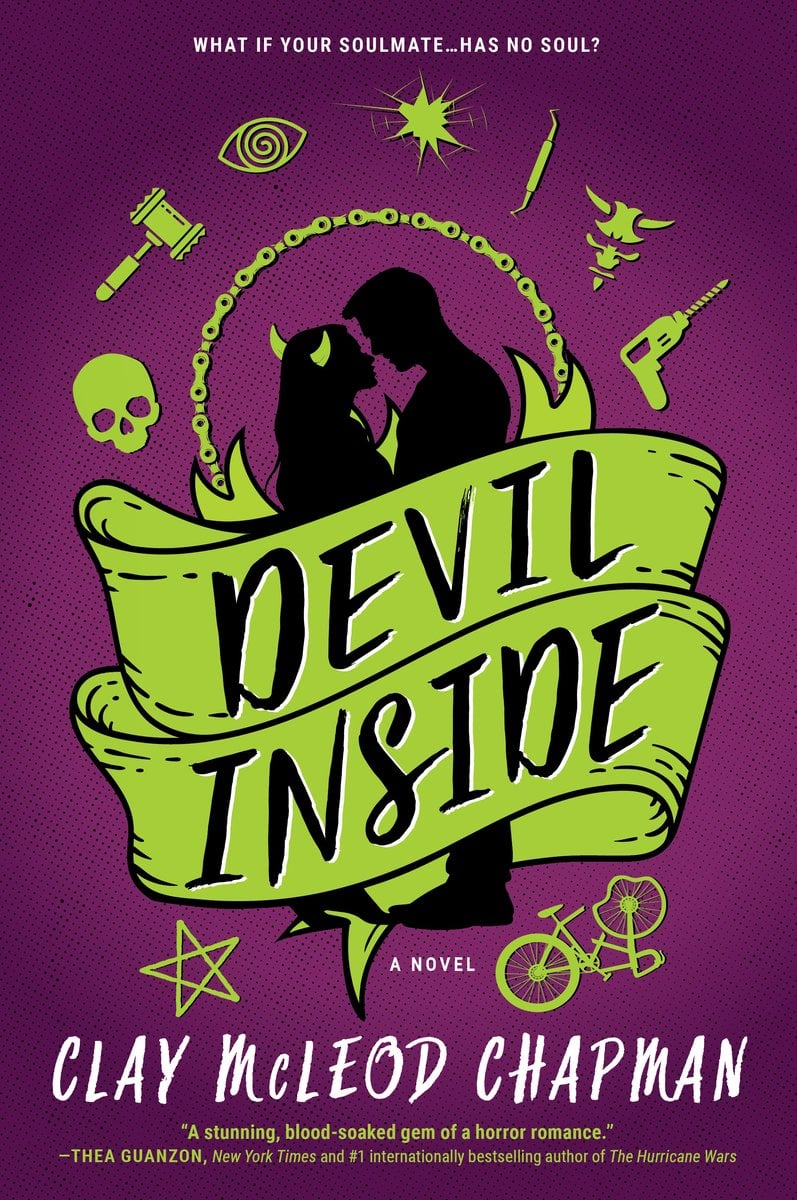
When I write my stories, I read them out loud to myself. I’m a weird roommate. There needs to be a certain rhythm, a particular cadence, to the text itself in order for it to flow. This lends itself to a more energized reading.
I’m a ham. Always have been. What I’m not is an actor. I’ve dedicated my writing to the pursuit of capturing characters and channeling their voices for an audience, sometimes a live one. The result, sometimes, is lightning in a bottle—or more like a glow: That singular instance where these characters come to life, even for just a flickering moment. The audience is brought into the fold for a short time, and we all partake in that alchemy usually saved for the stage. We’re transported somewhere else. Either around the proverbial campfire or at the bookstore, and for just a fleeting few breaths, the world melts.
We’re in the story.
Here’s a horror tale: You’re at a literary event… and the author reads from their work. And it’s dry. Worse than dry… You practically hear the dust wisping off the words, the cobwebs clinging between the sentences. It’s a dull affair that sends the audience to sleep.
Writers shouldn’t be tasked with theatrics. The words should be enough. That’s why we’re here in the first place, isn’t it? It’s the books that bring us together. The prose is all. But—and here’s a big but—what if our prose lends itself to an innate unlocking, a separate element embedded into the text itself? What if there’s a voice captured within these stories? What if we can channel it?
The challenge remains this: Is the text itself imbued with enough of that voice? The performance itself shouldn’t be necessary. It can’t be the ultimate result for the story itself, but it should be an ancillary experience, an enhancement of the text, where the performance transcends the text and becomes something altogether different from the story. It becomes a version of the story—a road-show version, if you will.
Here’s another metaphor for you: If a collection or anthology of short stories is the album, or mix-tape, then a live reading of any one of its stories is that band, onstage, on the road, on tour, performing their songs live in front of an audience.
Is one better than the other? Maybe.
Does one have a different energy than the other? Absolutely.
Does one need the other in order to exist? I don’t think so, exactly…
I remember when I first read Edgar Lee Master’s Spoon River Anthology. Here was a book, ostensibly a collection of prose poems, each thematically and geographically linked to the cemetery in this small southern town in the midst of the Civil War, where the dead all have their say to tell their own individual story. Their voices were captured on the page, ready to be unlocked, given voice again.
It’s wild, but in the fifth grade, our school did a production of a musical version of Spoon River Anthology, which was how I encountered the material in the first place. I was given a monologue, no more than a paragraph, my own character, my own ghost, to perform. I was a Confederate soldier who perished in battle, left to question the meaning of war and its brutality.
We had all been given the book to read at our leisure, as an opportunity to see the bigger picture of Master’s narrative tapestry and how all the character’s narratives wove together to tell an even larger story. These individual monologues were micronarratives that, when read together, tethered a macronarrative in place: Our small stories told the larger story of our town, of the South itself, and the horrors of war.
I fell in love with it, with what storytelling can do.
I think of Erin E. Adams. I think of Nat Cassidy. I think of M. L. Rio. I think of Eric LaRocca. All have some history with the theater, whether onstage or behind the scenes. Their work has a commanding voice on the page and aloud, whether it’s them reading it or someone else, that resonates long after they’ve put their last polish on their pieces. Their authorial voice remains, and it vibrates with a theatrical electricity that continues to hum. Any one of us could pick up their works, flip to a page, and summon their stories to life. Don’t believe me? Read Jackal out loud. Try any one of the stories in I Know A Place. It’s there—the glow is there—just waiting for you to read it out loud and release it.
I’ll be honest with you: If I were more confident in my own writing, I doubt I would be as theatrical in my readings. If I were a better writer, my own self-consciousness asserts daily, I wouldn’t need the performative pyrotechnics to sell the story. The words would be enough. Let the text do the heavy lifting, not the live reading of it. This fear constantly haunts me. That my stories will never be enough.
I’ve come to learn that, when it comes to promoting my own work, I tend to do my best when I get in front of an audience and read them a story. I’m in the trenches, as it were. This is my grassroots campaign to get people interested in my work, one reading at a time.
 Clay McLeod Chapman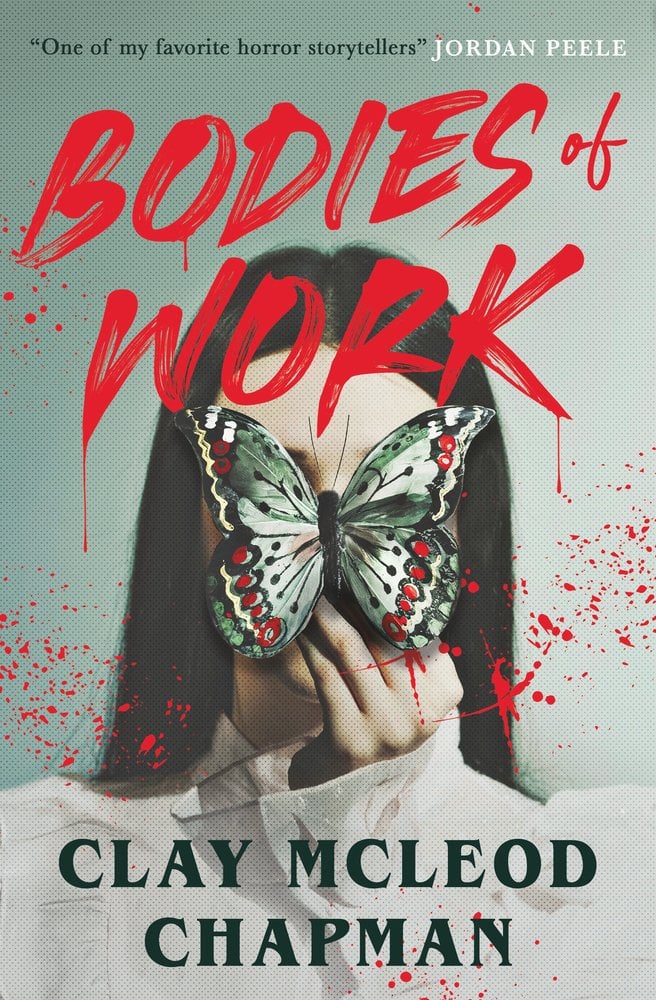
Look, at the end of the day, I’m just trying to get you to take me home with you. That’s all I’m after here. Take me home.
The power of first person narrative, whether read aloud or to one’s self, is that the narrator draws the reader or listener in. The sheer act of listening is complicity in of itself—and much like within Poe’s stories, it’s a trap. Once we’ve come to the realization that our narrator is mad and wholly unreliable, it’s too late. We can’t escape. They have us backed into a corner. All that’s left to do is let them tell their side of the story. Speak their piece, so that their troubled soul may be at peace (if not resting in peace) once and for all.
A live reading unlocks the words. Gives them the air to breathe once again.
Let them fly.


Comments ()