Motel of the Mind: Lora Senf’s Unnamed Bones, Isolation, and the Hope of Survivalist Horror
How the YA horrors in Senf's latest release have power beyond belief
We partner with Bookshop for all our book links. Any purchase you make through our links help support Darker Times.
When I was a teenager, I was depressed.
That word, depressed (or depression), felt like an anvil that repeatedly dropped inside myself time and time again. With every observation of maladaptation from a loved one, my heart would plummet, their comments feeling like accusations. How could I be thirteen, fourteen years old and be depressed? How could I carry so much pessimism, so much negativity in such an inexperienced mind? The word depression, at the time, meant I was flawed, designed faulty. My tears came too quickly; feelings of doom taking up residence in my mind without permission. I’d rather sleep than deal with my problems, and I seemed to attract negativity. The only thing I knew to do was to deny all of it – every claim that something wasn’t quite right.
I would reason out that I wasn’t depressed; I just had a bad day. I wasn’t depressed; joy was just locked away and the key wasn’t easy to find. I wasn’t depressed; no one else understood me. I wasn’t depressed; I just needed to be older, and things would get better.
I was on an island. Just like Harrow Lane.
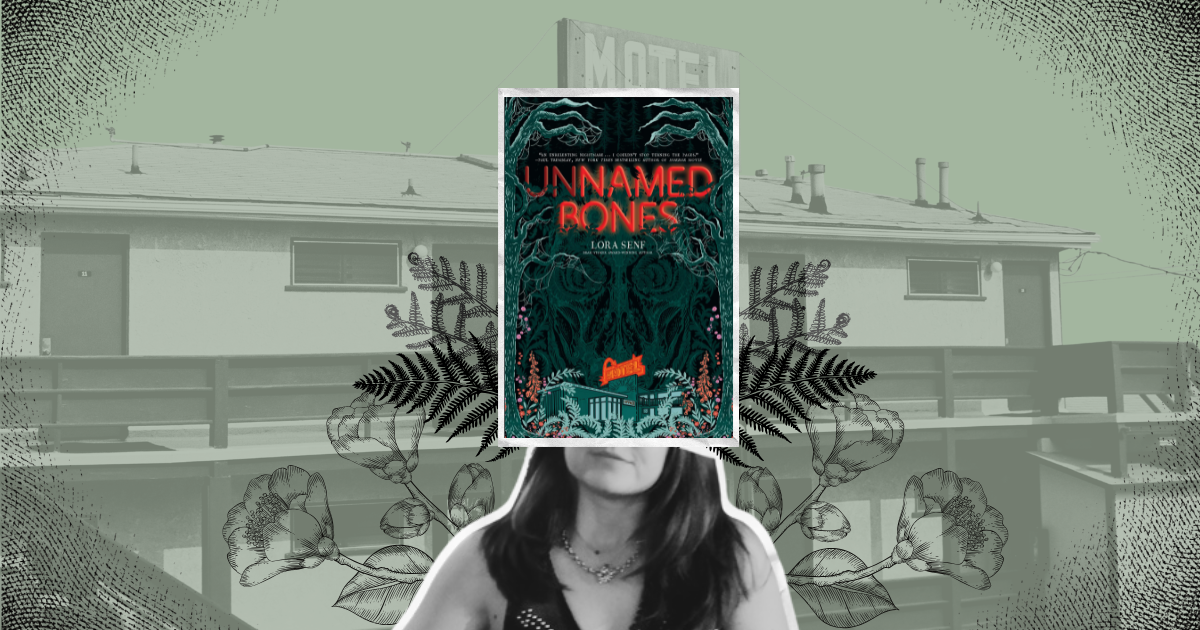
The protagonist of Lora Senf’s young-adult novel Unnamed Bones, Harrow feels heavy, as if gravity affects her more than anyone else. At sixteen, she plans an impromptu trip with three acquaintances (one, a used-to-be-best-friend) to an island that has seemingly appeared overnight. A place that shouldn’t exist, this impossible setting becomes the stage for Harrow’s mental hardship following the loss of her father. In search of meaning of anything and everything, Harrow finds herself stranded on the island with her friends as one mishap after another coalesces into rapid treachery, the way home completely unknown to the teens. With mounting physical and emotional peril, Harrow must contend with the realities before her, both in the motel she’s constructed in her mind to keep her feelings housed and in the uncanny, terrifying setting beneath her feet.
As evidenced by the mental motel in Harrow’s mind, depression is not a singular emotion relegated to a room at the far end of the hall. It can’t be controlled despite anyone’s best efforts. It doesn’t like locks or keys or rooms or compartments. Depression is an amalgamation of emotions or sometimes a complete lack of them, a strange combination that varies from person to person. For Harrow, her depression is never named explicitly, but this heaviness she discusses was something I clearly recognized from over ten years ago. It was (and sometimes still is) the sensation I could (can) not give words to. The way I preferred the couch or my bed to movement, the way sleep always greeted me with open arms, the way my snark and cynicism actively brought conversations down. That heaviness, that weight—that was my friend.
But unlike Harrow, I could never manage my emotions as a teen. Everything felt like tangled gray scribbles, interconnected lines that bled from one to the next in various shades of intensity. I would try to untangle them time and time again, but I would end up right back at the start, frustrated and lost. Looking back now, I yearned for the imagery of a mental motel, a place of organizational refuge—a set location to let my rage, my anger, my sadness, my disappointment, even my fleeting optimism spend one night in separate rooms.
When I think about why this kind of structure was never apparent, a motel’s defining aspect screams at me—the outward facing door. Without long, internal hallways, central corners to hide behind, or interior solace, a motel is an inherently vulnerable place. It isn’t a final destination; It’s a stop on a trip, an in-between place. And, once inside a room, the only thing standing between you and the outside is that one door—the one that faces the parking lot or the highway or anything at all. A motel is vulnerability given shape. There’s even a blinking neon sign, signaling “vacancy,” letting everyone know that there is room for another thing to feel, another emotion to manage. A motel means exposure, visibility. Perception.
Nothing could have been more terrifying for my teen self.
With age, I’ve learned that vulnerability isn’t a walk in the park, but it is not necessarily anything to fear to this degree (shoutout therapy, life experience, and many other factors). But in the thick of things and standing on the precipice of adulthood, teenage Anna spent a lot of time in her head, alone. Solitude became familiar, safe. A refuge. But, as is the case with isolation, that solitude grew claws. With Unnamed Bones, the island Harrow finds herself stranded on, sends terrifying figures after her and snatches her friends away. Senf crafts this hellish scenario to force an emotional and mental reckoning of nearly cosmic proportions, signaling just where isolation leads us all in reality: madness.
Senf doesn’t blink in the face of so much bleakness. She recognizes the complexity of such a conundrum, takes in all of its horrific, ugly details before pulling on the threads of Harrow’s logic to unravel an understanding of sorts. Providing legitimate solutions to the survivalist issues before her characters, Senf demonstrates the equality of physical survival as well as mental on this island. Harrow and her friends have to find water, have to determine where shelter is best, and sleep in shifts to remain safe. These are real, practical problems and solutions that unfold right alongside the mental conflicts in Harrow’s mind—foils for one another. Unnamed Bones reads like a blueprint for the realities of dire situations, a glimmer of survival against all odds. Senf designs wings, maybe not to fly long distances, but to maybe get off the ground and out of harm's way, even when we feel particularly heavy.
Senf crafts hope.
Reading this novel now at the age of twenty-seven, Unnamed Bones moved me in a multitude of ways. Like depression and any other “heavy” feeling, untangling the web of where things begin and end feels impossible. But if we can craft a place, not a home, just a place to rest our heads, to gather our thoughts, and to find a way forward—well, maybe there’s hope for all of us yet.
In the right hands, this is what the horror genre does best. It turns monsters into meaning, hurt into hope. It does the heavy lifting in the hearts of so many, myself included. The advice I would give my younger self wouldn’t come in the form of words. I don’t think I would tell younger-Anna anything at all; I would just give her this book.
 Lora Senf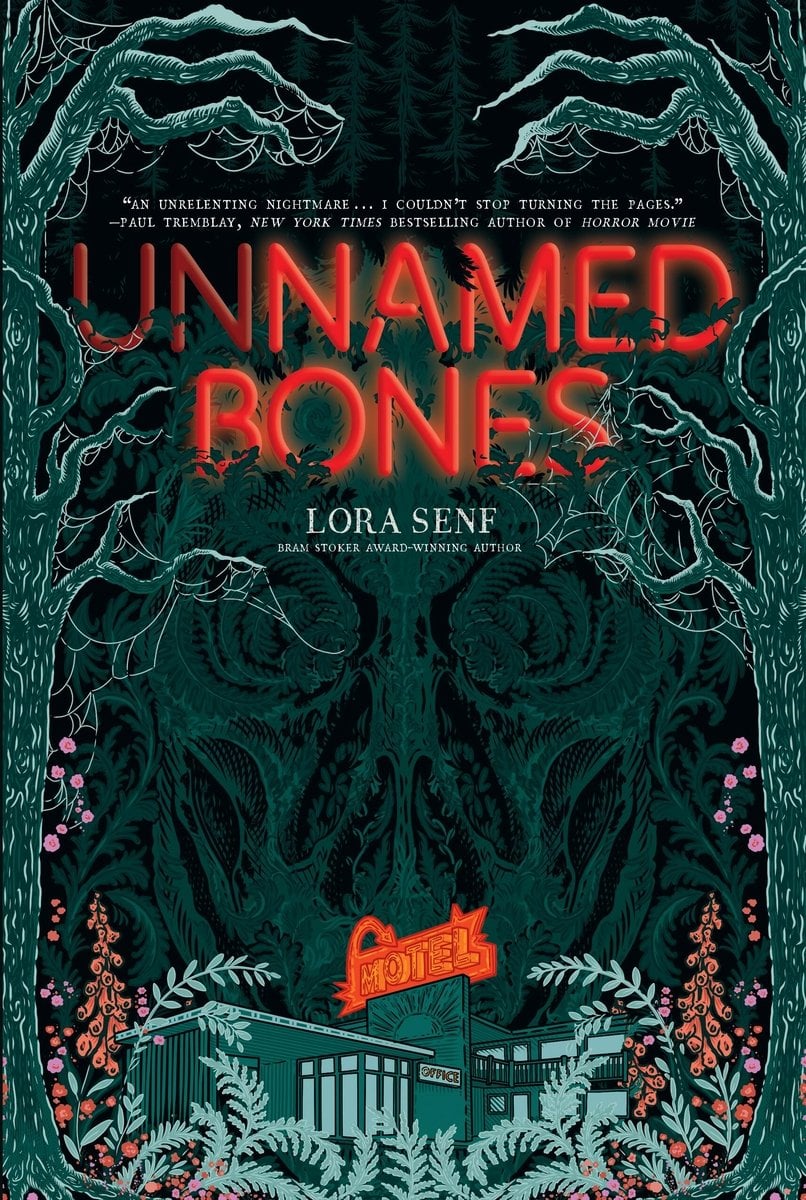


Comments ()