Seen by Shirley: A Young Woman’s Camaraderie with One of Horror's Greatest Voices
A love letter to the author who may understand me best, from fear to understanding and everything in between

Today's the day, folks. The last day of 💫 the Darker Times Subscriber Drive 💫. We’re trying to hit 500 paid subscribers, and this piece would normally be exclusive to paid subscribers. But, to celebrate, all of our posts are free until MIDNIGHT TONIGHT. INCLUDING THIS ONE! To keep Darker Times running, we need money—hot, wet, bloody money—to keep the lights on and the words flowing. So if you like this post or even if you hate it, consider subscribing in exchange for great, emotional, analytical horror coverage.
We partner with Bookshop for all our book links. Any purchase you make through our links help support Darker Times.
Shirley Jackson was a mystery to me for 27 years. With a larger than life presence that looms over the horror genre, well, all of literature in general, I will admit I was afraid to read her. Not for the subjects she broached, but for how special she seemed. Inimitable. Jackson was a ghost that haunted me when I read A Head Full of Ghosts and The Last House on Needless Street. She peeked over my shoulder every time I opened a haunted house novel. She waited until I was ready to find her.
I now have a teacup full of stars on my forearm.
It’s not something I ever thought I would have. Something so permanent, so visible. In fact, tattoos are the antithesis of how I viewed myself for most of my youth, as someone who just wanted to get by, who didn’t want to make waves, who just wanted to exist. Shirley Jackson seemed to understand that, and I don’t believe she wanted any of it.
"Don’t do it, Eleanor told the little girl; insist on your cup of stars; once they have trapped you into being like everyone else you will never see your cup of stars again; don’t do it…Brave girl, Eleanor thought; wise, brave girl." - Shirley Jackson, The Haunting of Hill House
I’m not the only person I know with a cup of stars tattoo. A lot of people I love and respect have a variation of this somewhere on their body, a token of their love for Jackson, The Haunting of Hill House, and the indescribable impact the book has on them personally for a myriad of reasons. This is the book I have had most frequently referenced in relation to the horror genre, the story that made readers fans of horror, and that inspired so many of the novels I love dearly in our present moment. It’s also the story most people say is the most frightening.
I hadn’t read it until last fall.
How does one approach a book, an author, with such a reputation, such a legacy? How do you interact with the source material that has shaped one of your greatest passions? And, how did a book from over sixty years ago see me so clearly?
By page eighteen of my copy of Hill House, I fully understood the gravitas of someone like Jackson and the power behind her words. As recited above, “the little cup of stars” scene is renowned, not for its horror (that would come later), but for the immediate understanding of the female experience: denial. Eleanor Vance, upon seeing a little girl demanding what she wants, doesn’t condemn the child for her specificities. Instead, she insists upon them.
Our world is one that has told women to not bother. Don’t make a fuss. Don’t be loud or draw attention. Take what is given, do not ask for more.
Shirley Jackson tells us to do the exact opposite.
The Haunting of Hill House was published in 1959 during an era known for its idealized homemaker lifestyle thrust upon women. Supper on the table by the time husbands get home, kids seen and not heard, and not a hair out of place. Personal desires were best left for pretty little heads, and a woman’s life was spent in service to others. No room for a cup of little stars.
Jackson not only understood that this notion is tragic, but she wrote and published a book that so artistically and tactfully gives shape to the horrors of such isolation and repression. This is the very definition of feminist progressiveness, as we learn from Eleanor’s story that such denial of self makes for a breeding ground of susceptibility to hurt. Hill House preys upon Eleanor’s insecurities, severing each and every sense of fleeting connection she establishes with no regard for the hope such relationships instill in a profoundly lonely person. It’s a harrowing work, tearing a woman apart like that, and it seems the opposite of feminism. But such violent psychological malfeasance screams of a deep understanding as to what makes a woman want to live, want to fight, want to love. You cannot tear someone to shreds without understanding them completely.
Utter terror and full recognition live in duality where Shirley Jackson is concerned.
I have a cup of stars on my forearm, but I’m contemplating getting a black box, too. One that’s, “no longer completely black but splintered badly along one side to show the original wood color, and in some places faded or stained” as Jackson pens in her short story collection, The Lottery and Other Stories.
I read Shirley Jackson’s “The Lottery” for the very first time today.
What struck me wasn’t any one aspect of the story; its reputation precedes it. Rather, my already formed notions of Shirley Jackson were solidified. Her understanding of a fragile humanity, her boldness, and her willingness to push on society’s bruises to bring the bloodiness of our nature to the surface make her an unparalleled voice in all of dark fiction, especially considering the year a story like this was published in 1948. There’s nothing supernatural or paranormal about “The Lottery,” either; just man’s propensity for cruelty, violence, and conformity.
 Shirley Jackson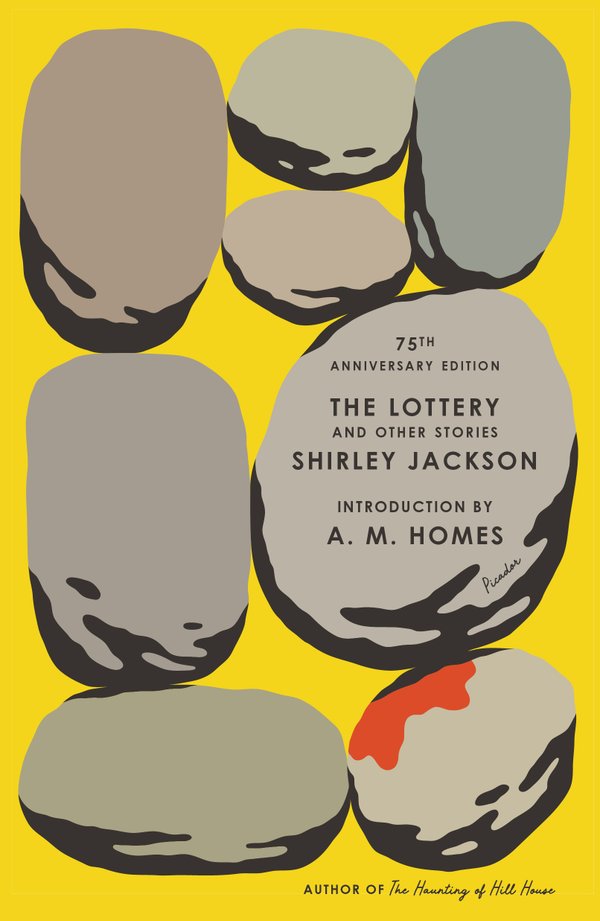
I’d like to think if I could have a moment with Jackson today, I could impress upon the harrowing joy her work brings me as a young woman living in America in 2026. And in some ways, I guess this piece is my ode to her, my way of expressing the truly exceptional experience of getting to discover her work, each story a trove of treasures. I’m not a Shirley Jackson scholar; I’m still discovering her stories all the time. But I do know that there’s nothing quite like finding another human who understands humanity the way you do, speaking the same shorthand, telling the same inside jokes, and whispering the same ghost stories. I don’t know that there is a concentrated way to fully appreciate an artist like this. The gravity of Jackson’s work will forever ripple through the fabric of time and story.
Shirley Jackson was a whispered name for the majority of my life, a reverent idea of an author who mastered her craft like no other. But for the last eight months, I’ve carried her with me daily. I don’t know that we possess the ability to fully understand another person, not entirely, especially once they’re gone. But I love the ghost of Jackson more than I can ever fully say.
Comments ()