Setting the Record Straight About Middle Grade Horror
Ally Russell pens a passionate argument for letting kids read what they want, especially if what they want is scary stories.
Welcome! You’ve come to Darker Times during a strange and special time: 💫 the Darker Times Subscriber Drive 💫. We’re trying to hit 500 paid subscribers by August 14th or else we will all be hunted down and skinned alive in our beds. Ha! We kid. But not really. To keep Darker Times running, we need money—hot, wet, bloody money—to keep the lights on and the words flowing. If you like this post or even if you hate it, consider subscribing in exchange for great, funny, analytical horror coverage.
We partner with Bookshop for all our book links. Any purchase you make through our links help support Darker Times.
I will not use this space to define the middle grade horror category or delve into its history. If you want a fun and informative piece on the history of horror for young readers, author April Snellings wrote It Came From the Kid Lit Section: Remembering the Children’s Horror Boom of the 1990s, which tracks the explosion of middle-grade and young adult horror. It’s a fantastic read that will make your heart swell with nostalgia.
Instead of introducing you to middle-grade horror, I’d rather use this time to share five things that I have observed about the category so that we might reflect on how children’s literature will impact the future of reading, writing, and literacy.
Absurd, Erroneous, and Interesting Statements About Middle-Grade Horror
I have worked in the world of children’s books for fifteen years: first as a bookseller, then a student and a trade reviewer, later as a publishing professional, and now as an author. I offer up my resume so you’ll know that I’ve encountered all kinds of folks in the book space, including readers young and old, students of kid lit, authors, editors, and agents, as well as people who have no connection (or understanding) of the world of children’s literature.
During this time, I’ve heard a range of statements about kid lit, like “It’s easy to write for kids.”
If someone says this to you, my advice is to nod and then search the room for people who have a deeper respect for children’s literature.
Can writing for children be approached with enthusiasm and imagination? Absolutely. Can it be fun? Totally. However, most children’s book authors will tell you that they take seriously the business of writing for young readers, because they are crafting stories that will inspire, mold, and compel kids to keep reading in an age when books are being villainized by adult book banners and shoved to the side in favor of screens. That is not an easy task.
I’ve also heard “No one is writing horror for kids.”
If you haven’t visited the children’s section of a bookstore or library, then say that, but do not say things that simply aren’t true. Like the boogeymen, children's horror authors exist. (If you turn out the lights and say Lora Senf’s name three times in the mirror, she will appear.) These authors span the spectrum of middle-grade horror, covering everything from creature features and ghost stories, horror comedies, short stories, horror with heart, and more. If you can’t name any middle-grade horror authors, find your nearest children’s librarian.
 Ally Russell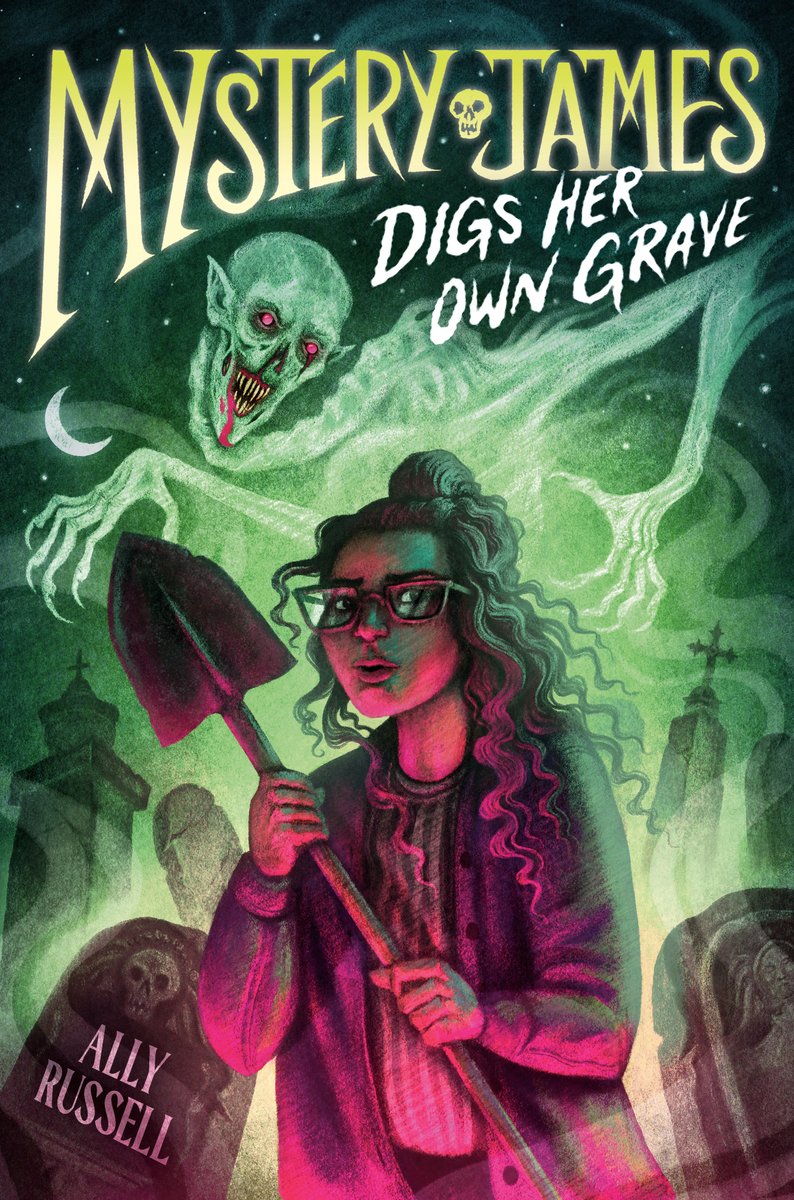
More recently, I’ve heard: “Middle grade is dead.”
This is a statement I understand. I don’t agree with it. It’s publishing. Categories and genres ebb and flow, but I do understand the concern here when we consider recent book bans, the literacy crisis, and the rising cost of books.
That said, I do think middle-grade fiction could be performing better than it is:
- If we listened to librarians and teachers. Their perspectives and insider knowledge are invaluable. They have their fingers on the pulse of what kids ages 0-13 actually want to read, but too often they’re restricted from doing their jobs because of book bans and government overreach.
- If more books catered to ages 10-13 to fill the massive void for kids who are too old for the younger end of the middle-grade spectrum but not quite ready for young adult.
- If some books were shorter.
- If publishers stopped trying to produce unicorn books. (No, I don’t mean books about unicorns. I mean the inane quest for a mythical book that will be beloved by every single reader.)
- If every endcap and table didn’t feature the same white male authors around Halloween and we made space for other authors.
- If the spaces where young readers browse for books weren’t enclosed by walls adorned with dated picture book characters and the middle-grade graphic novels weren’t surrounded by board books and teething toys. Libraries excluded, we have yet to cultivate spaces for young readers that feel authentic to their generation. I blame nostalgia for this. More on that later.
The above ifs would not solve every problem plaguing middle grade, but addressing even a few of these might help the current state.
Finally, how about this statement: “Horror for kids isn’t scary.”
What an odd thing to say.
Have you heard J.W. Ocker’s story about the one-dimensional man that can slither under your bedroom door? Have you read Hannah Alkaf’s tale about a vengeful spirit named Pink? You don’t find the depictions of taxidermy and rabies unnerving in Christian McKay Heidicker’s Scary Stories for Young Foxes? And as far as I’m concerned, Remy Lai’s Read At Your Own Risk is just as unsettling as those notes from Zampanò in House of Leaves.
If you are someone who thinks horror for kids isn’t scary, once again, I implore you to seek out a children’s librarian.
Would it be more accurate to say that children’s horror could be scarier? Perhaps. But even that statement wouldn’t be entirely accurate, as horror is subjective and doesn’t need to contain monsters and jump scares to be “scary.” However, this is a nice segue into my next observation.
Kids DO Want Scarier Stories
“Do you know about the man who follows you everywhere until you eventually kill yourself?”
I’m paraphrasing here, but this was the gist of what a young reader said to me last March. I’m sure there were a few “ums” in there.
I broke eye contact with the young reader and looked toward the back of the room, eyeing the teachers and volunteer parents for help. How did they want me to respond? Suicide was a bleak subject for a room full of fourth graders, especially with an image of a Goosebumps book projected on the wall behind me. But the adults only winced and mouthed the words “We’re sorry,” like they were used to this sort of talk from kids.
The young reader went on in more gruesome detail about the urban legend that had been carefully crafted at a slumber party or on a Reddit board and then probably passed down from teens before being traded between elementary school students like currency. The young reader’s classmates looked at him with wide, eager eyes, willing him to go on and share the story that had so clearly haunted their brief lives.
This spring, I had the honor of talking to over 4,000 kids in classrooms all over the country. The legend of the man who follows you wasn’t even the most disturbing story I heard from young readers during my travels.
My spring travels made one thing astoundingly clear: Kids want scarier stories.
 Ally Russell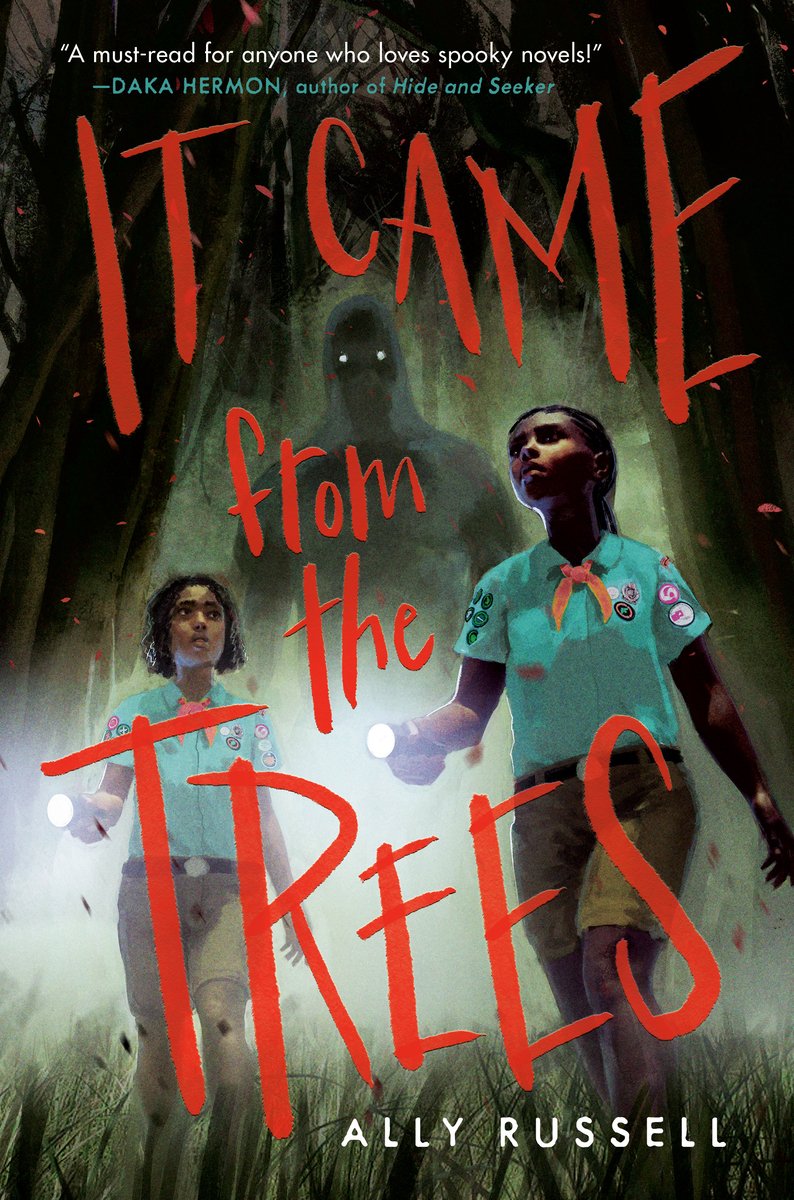
When we think back to our own urban legend-filled youths with stories about bloody women in mirrors and killers hiding in the back seats of cars, none of us should be surprised that kids like grim and haunting subjects. Plus, librarians have been shouting this for years.
For all the pearl-clutching that goes on in the world of children’s horror (I’m scowling at you, book banners), I wonder if the people advocating for book bans, especially those that target horror, have actually talked to children about their reading interests.
Or have they only talked at kids about reading based on their own childhood experiences?
Is Nostalgia Part of the Problem?
I’ve come across a decent amount of horror for kids and adults that leans into VHS and the 1980s and ‘90s, and while it’s fun to reminisce about the past, we need to remember kids are living in this present. In 2026!
I know some folks might not want to hear this, but in some small way, I can see a connective thread between the unbridled zest for nostalgia and the current wave of book bans.
Religion, politics, and unchecked fascism aside, there are adults who see their childhoods through rose-colored glasses, where innocence and optimism abound, and they eschew the anxiety, terror, and constraint of childhood—all common themes in middle-grade horror.
I’ve been told by several young readers that they were not allowed to read my books because an adult in their life thought the book might be too scary. I experienced this firsthand at a book festival: A young reader begged their parent for Down Came the Spiders—a book with Goosebumps-esque thrills and chills. The parent said no. The young reader’s face fell and their shoulders slumped as they were steered toward a non-horror book.
Some days I wonder if that kid is reading or if they’ve turned away from books entirely because their agency was taken away by an adult.
 Ally Russell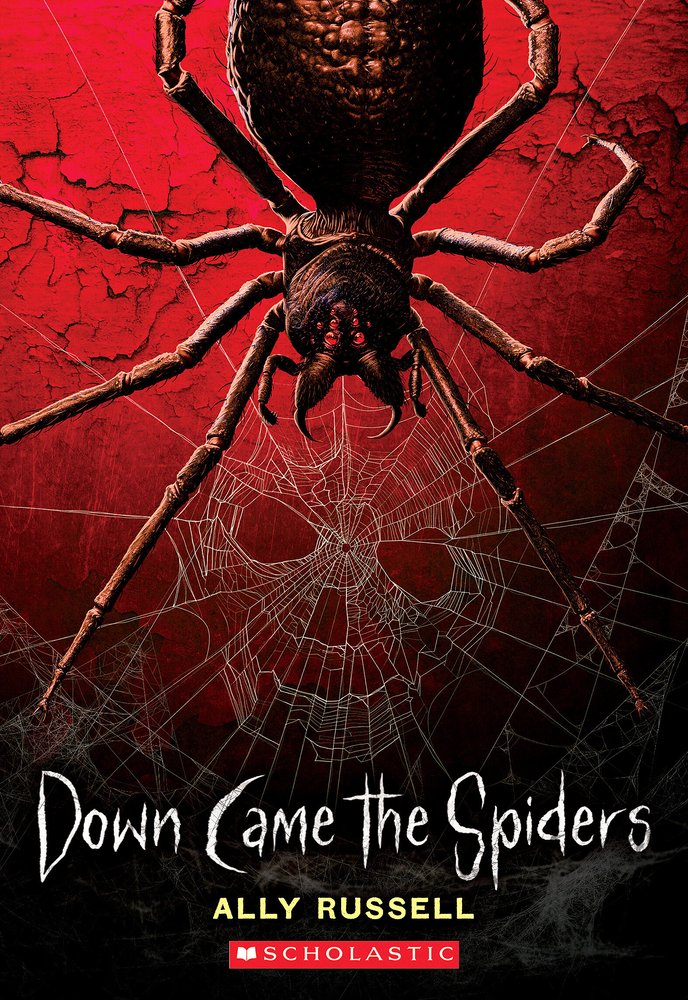
This kind of thinking—where the adult always knows best—sometimes stems from nostalgia and the false notion that one’s childhood was a perfect and happy experience; therefore, difficult themes should not be presented to young readers.
Sentiments like these pave the way for quiet censorship and book bans.
Where children’s literature is concerned, perhaps it would be best to keep nostalgia where it belongs—in our heads and hearts.
Who Gets to Write Horror?
As a recovering social media manager, I have had the misfortune of reading a lot of interesting opinions. Last year, I read a social media post about award-winning horror. The post, whether it meant to or not, insinuated that horror is only valid when it is written by award-winning authors.
Because nuance is often trapped in an internet black hole, I’m going to assume good intent and that the social media post was meant to uplift horror. However, personally, that post cemented a truth that I have long suspected about some readers who don’t regularly engage with horror, and that is this: To some, horror is a respectable genre only when it is made palatable via popularity or by award-winning authors. We see this with film awards too. There are horror films that are every bit as touching and dramatic as any mainstream Oscar winner, and yet, Rebecca Hall and Toni Collette have never received their flowers.
This line of thinking is elitist and exclusionary, and that’s not what we weirdos do in the world of horror. Furthermore, it sidelines excellent books written by authors who have studied the genre and perfected the craft of writing horror for kids.
Why All Readers Should Care About Horror for Kids
Across blogs and social media platforms, readers serve up curated horror recommendations, and many of these lists include adult and young adult books. End scene. That’s it. Nothing comes after the YA recommendations, and I find this odd because middle-grade horror actually comes before those other two categories.
Before you were an adult reader of horror… you were probably a child reader of horror.
Most adults don't pick up a book and suddenly become readers. Often, a love of books is established in one's youth. If that love of horror (and reading in general) is being snuffed out early, we should all be concerned with the possible effect—dwindling readership in the coming years.
The number of authors and readers who write and read horror today because of their childhood experiences with fiction like Scary Stories to Tell in the Dark and The Dark Thirty is astounding, and if we want that same return on investment for future generations, we have to invest the same energy and enthusiasm into uplifting middle-grade horror.
If you're taking the time to read this, you were likely the kind of kid who always had a scary book in your backpack. You know that horror isn’t “having a moment.” Horror isn’t a trend; it has always been here, lurking in the background and under your bed. While you outgrew clothes and your own skin and bones, you didn’t outgrow your thirst for horror.
How cool for you, kid.
 Ally Russell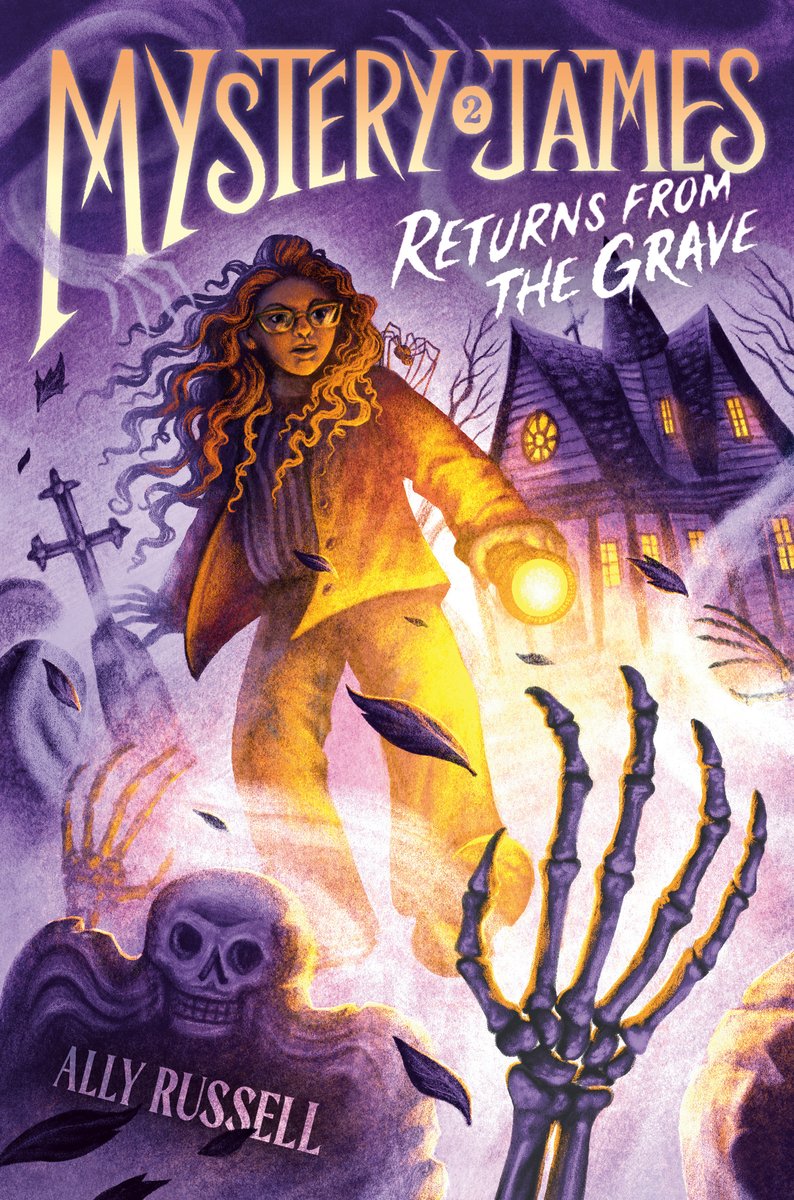
If you would like to dive beneath the bed where monsters lurk, here are a few resources to help you better familiarize yourself with middle-grade horror:
- SpookyMiddleGrade.com: A collective of middle-grade horror authors.
- TheHauntedArchives.com: An online bibliography of middle-grade horror and the Hunsberger Scary Scale by Librarian Taylor Hunsberger.
- AuthorsAgainstBookBans.com: Because too many authors are being forced to use their platforms to defend books instead of celebrating them.
- Summer Scares: Each year, horror titles for adults, teens, and kids are selected by a committee. The Summer Scares program then provides libraries across the country with resources to champion the selected books and celebrate the genre.
Ally Russell is the USA TODAY bestselling author of It Came from the Trees. Her other books include the Mystery James series, which was nominated for an Edgar Award and a Stoker Award, Down Came the Spiders, and Book of Outcasts (Wednesday). She grew up on a steady diet of Halloween parties, horror films, Unsolved Mysteries, and Goosebumps books. She has always loved scary stories, and got her MFA from Simmons University and, eventually, a job working in children’s publishing. She hails from Pittsburgh—ground zero for the zombie apocalypse. Ally lives with her husband and her two black cats. She’s afraid of the woods, the dark, and heights. You can find her at @onedarkally on Instagram or allyrussellbooks.com.
Comments ()