Let Them Fight: Hokum (2026)
In this edition of Let Them Fight, Emily and Anna tussle over Hokum, the third movie from rising star Damien McCarthy.
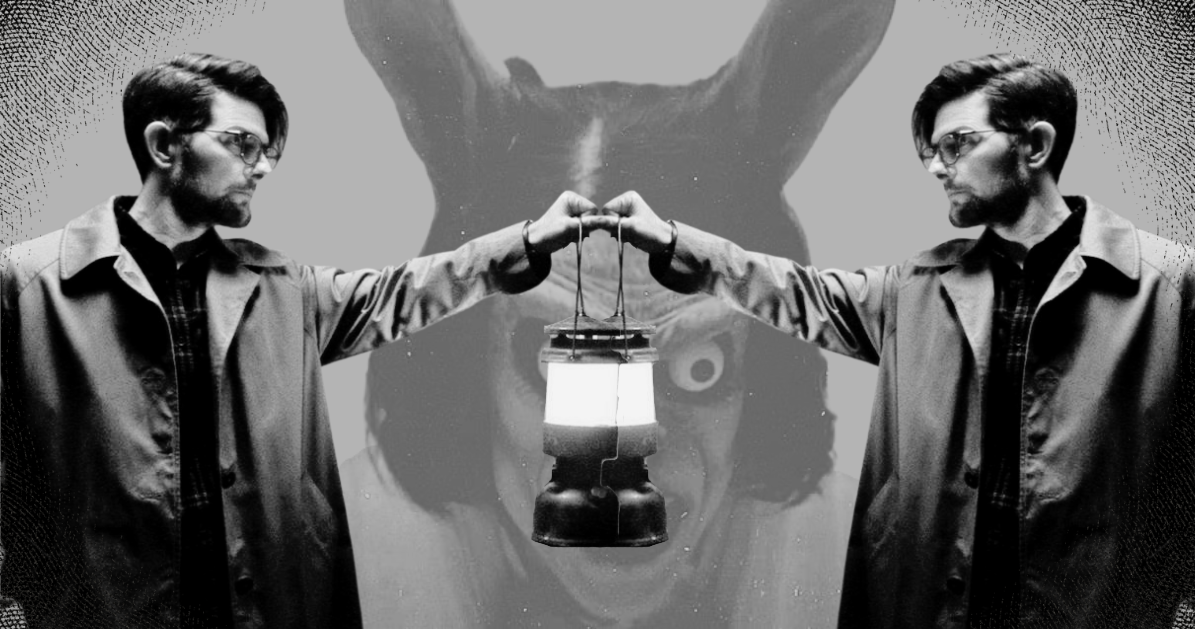
Welcome back to Let Them Fight, a recurring feature where we have a civil, measured, text-based cage match about a work of art we disagree on. This time, Anna and Emily calmly discuss Damian McCarthy’s 2026 film, Hokum.
Released in May of this year, Hokum follows a writer, Ohm Bauman (Adam Scott), as he travels to Ireland to scatter his parents’ ashes. While staying at the same inn where his parents spent their honeymoon, Ohm encounters local lore positing that the inn is haunted. Things go from bad to worse, and, of course, horrific events ensue. If you’ve been keeping up with us Darker Times folk, then you probably read Anna’s piece on the worst trip to the movies ever. And, Hokum was the movie she saw, so there’re a LOT of feelings to discuss.
Spoiler warning: spoilers for Hokum, Oddity, and Caveat follow, so proceed at your own risk!
Anna: Let’s get right into it: I really disliked this movie. I want to say hate, but I won’t. Because in the end, I did watch the film with my shoulders in my ears, and it is a successful horror movie on that front. Scares aside, this just didn’t do it for me. Sorry Adam Scott, even you with your very tasteful haircut and very attractive little glasses could not save me from my disdain for the plot, Ohm’s lack of character arc, and the worn out trope of offing women to make the men compelling. Brutal takes, I know. But as always, I am entering this Let Them Fight with an open mind, and I do hope to leave a changed woman! Emily, what say you?
Emily: I’m so excited to talk to you about this one, because I have so many thoughts! To start, I love McCarthy’s two previous movies, Caveat and Oddity, both of which I would describe as “pants-shittingly scary.” Oddity in particular has one of the nastiest jump scares I’ve ever seen (if you’ve seen it, you know what I’m talking about—that fucking tent flashback!). So I was particularly excited about Hokum when it was announced. I didn’t get around to watching it until this weekend, and I’d say where I landed is that I liked it very much, but I didn’t like it nearly as much as McCarthy’s first two outings.

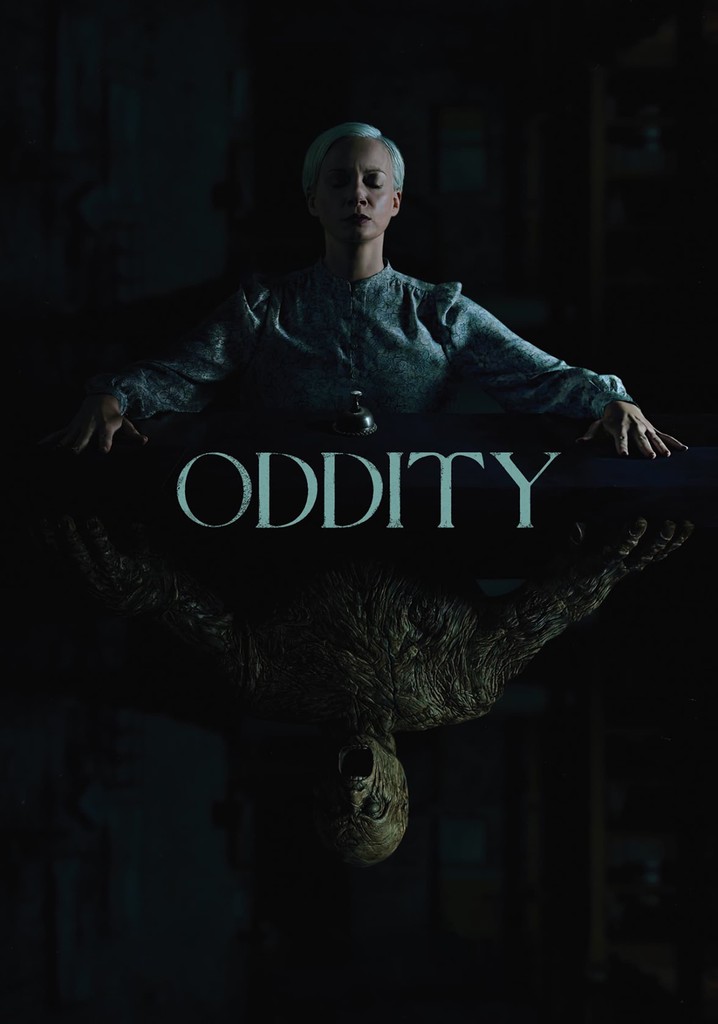
To start with what I really liked: I think Adam Scott is at his best when he’s playing a real piece of shit, frankly, and Ohm is a deeply hateable protagonist. I love the way McCarthy uses interior spaces, especially very cramped ones, and my god, the man knows how to construct a jump scare. I also love his preoccupation with creepy dolls and carvings and tchotchkes—the eerie cherubs in this movie, with their horrible little knowing smiles, are a delight. And I like the way he’s constructing a shared universe in his movies—the hotel desk bell ties back to Oddity, and Fiona’s rabbit costume echoes Caveat.
Also, not to jump to the end, but Mal’s death? ENORMOUS chef’s kiss for me. The moment he’s dragged into the depths of the witch’s basement and set upon by a crowd of only barely-glimpsed creatures made me sit up straight.
Anna, what did you like about this movie?
Anna: I’ll start off by saying that I also really loved Oddity. In fact, I distinctly remember you recommending it to me one of the first times we had the pleasure of speaking over a video call so talk about a full circle moment.
This is where you and I largely agree that Ohm is a real ass, a character that Adam Scott plays alarmingly well. Maybe it’s because I mostly think of him as Mark from Severance or Ben from Parks and Rec, but I DO LOVE AN EDGY ADAM SCOTT! THAT DOES WORK FOR ME. For a while.
My issue can be found in where the movie ends: I don’t know that Ohm changes all that much? Or maybe it’s that his arc feels too typical, too on the nose for this kind of grumpy-pants-writer archetype that Ohm embodies? I’m still piecing it out, but I almost felt like there was a more compelling, grittier story in fully exploring Ohm’s will to live following the events of everything. And ultimately, maybe it just upsets me that, put most plainly, this movie is about a sad-sack man that is saved by a woman cleaning up his mess, but she’s ultimately doomed by an even worse man. The bar just feels like it’s in hell.
To touch on the other points, I wholeheartedly agree. There’s something that McCarthy understands about the architecture of fear that really works. Like you said, the details your attention snags on, the nice embellishments, and the overall atmosphere he crafts really does work. Which includes Mal’s fate! That was satisfying for me!
In fact, I think the scene of Bunny Man (I can’t remember what he is actually, something from the kid’s cartoon that Ohm recalls watching) is ICONIC. We see it everywhere in the horror community! I just wish it was enough for me to get over, what I feel to be, caricatures of folks in this film. But again, curious about your thoughts on this!
Emily: Yeah, there were some fundamental storytelling elements here that didn’t quite work for me. For one, the frame narrative of the conquistador from Ohm’s novels—that felt trite to me, and I didn’t think it really felt earned. I guess maybe he changed the ending to honor Fiona, who thought the original ending was too bleak? But that’s me doing work that the movie should’ve done.
I also didn’t feel like he successfully connected the witch to Ohm’s backstory. Ohm doesn’t have a lot of depth beyond his towering guilt over accidentally killing his mother when he was a child, so I kept waiting for more of a connection there beyond Ohm learning to forgive himself. I also kept waiting for more information about how Cob, the hotel’s owner, ended up trapping the witch in the honeymoon suite, or about the horrors she wrought before her imprisonment.
What’s interesting to me about McCarthy’s films is that he tends to use the same building blocks in varying configurations: a protagonist who’s struggling with grief or guilt, an isolated setting, a creepy but ultimately helpful drifter, crackling intercoms, analog recording technology, weird little passageways, and women wrongfully murdered by shitty men. I don’t mind that—I think plenty of artists revisit the same motifs and themes over time. But these elements really gelled in Oddity and Caveat in a way they didn’t here.
Anna: Yeah, I 100% agree with your assessment on the whole plot structure of Ohm’s books changing to mirror where he’s at as a character. It felt a little too forced, like a “GET IT? GET IT?” kind of moment.
And the last big thing that irked me was the logistics of the lock on the elevator and upstairs in general. There’s a moment when Mal makes it back upstairs to chase after Ohm, but then the elevator locks behind him? But it hadn’t in other scenes? This could be a case of me missing things or just not suspending my disbelief like I should, but yeah. Another gripe!
How did you feel about the end of the movie and Alby’s confession that Ohm’s drink was spiked? That felt a little cheap to me, and I’m not sure it felt earned? I feel like I may be harsh regarding that aspect, not sure.
Emily: I didn’t mind the drink-spiking ambiguity! I was kind of waiting for it, actually, given how heavily it was hinted at earlier in the movie. Ohm clearly needed his mind opened, and psychedelics are used therapeutically for things like PTSD. I also appreciated that even as the movie called into question whether Ohm’s experience had been real, the camera zeroed in on the bruises on his wrists. I didn’t mind the elevator gate locking, either—I think being betrayed in some fashion by the physical space you’re in is another constant in McCarthy’s work.
I did find myself interrogating how I felt about this throughline of women being murdered in all three movies, and ultimately I found I didn’t mind it so much, since in all three cases, justice is very definitively served. In Caveat, the murdered woman gets to deliver that justice herself posthumously, which was deeply satisfying, and in Oddity, the murdered woman’s sister gets revenge on her behalf. Here, justice is delivered in a more roundabout way, by the witch, but it’s not specific to Fiona—the witch would’ve killed Mal regardless. That lack of specificity made it a little bit of a disappointment. What was your take there?
Anna: I like the way you’ve framed the idea of betrayal regarding surroundings, and I feel like I can live with that aspect in that light. I do still think Alby fessing up was another heavy handed move that could have been delivered more subtly, but that’s in combination with the heaviness of seeing Ohm’s books play out.
I don’t love the women-being-murdered thing here. I didn’t have an issue with Oddity, and maybe that’s due to the fact that it was another woman doing the work to avenge her sister rather than a dude.
Where it really doesn’t work for me here in Hokum is that Fiona saves Ohm even when he’s an ass. She does the “right” thing, saves him from his own suicide attempt, and ends up dead. Moreover, Mal kills her because she is pregnant (something that required his active participation) and doesn’t want his family to find out. It’s just a trope, device, set-up, whatever you want to call it that I’m a bit tired of traversing. Especially when taking in the context of morality, abortion, and women’s rights in the year 2026.
Ultimately, it feels like a toe dipped into a massive ocean of nuance without really exploring the horrors of that dynamic. Instead, Fiona is used as a set-piece for scares as evidenced by her decaying appearance in the dumbwaiter. We watch in anticipation to see if she’ll come to life like the other parts of the suite that we wouldn’t expect. We are made to fear the victim, and that doesn’t feel right to me.
Especially in conjunction with the lack of texture with the witch! It just felt like relying on the good ole crone archetype for creepiness’ sake.
I’m also trying to remember here, where does Mal kill Fiona? And in stuffing her in the dumbwaiter in the suite, where the hell was the witch then? I can’t remember if it’s explained why that doesn’t happen.
Emily: Mal doesn’t kill her directly—he drugs her and leaves her in the honeymoon suite, where she survives for some amount of time and leaves messages on Ohm’s tape recorder. At one point we hear her talk about the basement and say, “There’s somebody else down here”—so either the witch killed her or she starved to death/died of fright. That kind of tracks with Mal’s apparent cowardice.
I wasn’t bothered that Fiona saved Ohm during his suicide attempt—she’s a good person, and I think (hope) most people would do the same. But like a few other elements of the plot here, her murder felt too tenuously connected to the rest of the story. I think that’s my main complaint, really—there wasn’t quite enough connective tissue in this movie, even though the bones are pretty damn scary. Which is a shame! I hope for McCarthy’s next outing, he gets back to the tight plotting of his first two films, because the man’s got real chops.
Anna: Ah, yes, that’s right. That is very on brand for a man like Mal and all the more grating. I hate that guy.
You’re right for sure on Fiona’s goodness, and I also hope most folks would do the same! Just in this narrative structure, something about it felt like “goodness equals punishment,” a “damned if you do, damned if you don’t” truth for women.
No doubt Hokum is frightening as hell, I nearly threw my popcorn multiple times. I, too, am hoping for more Oddity and less Hokum on the next McCarthy go ‘round.
 Adam Scott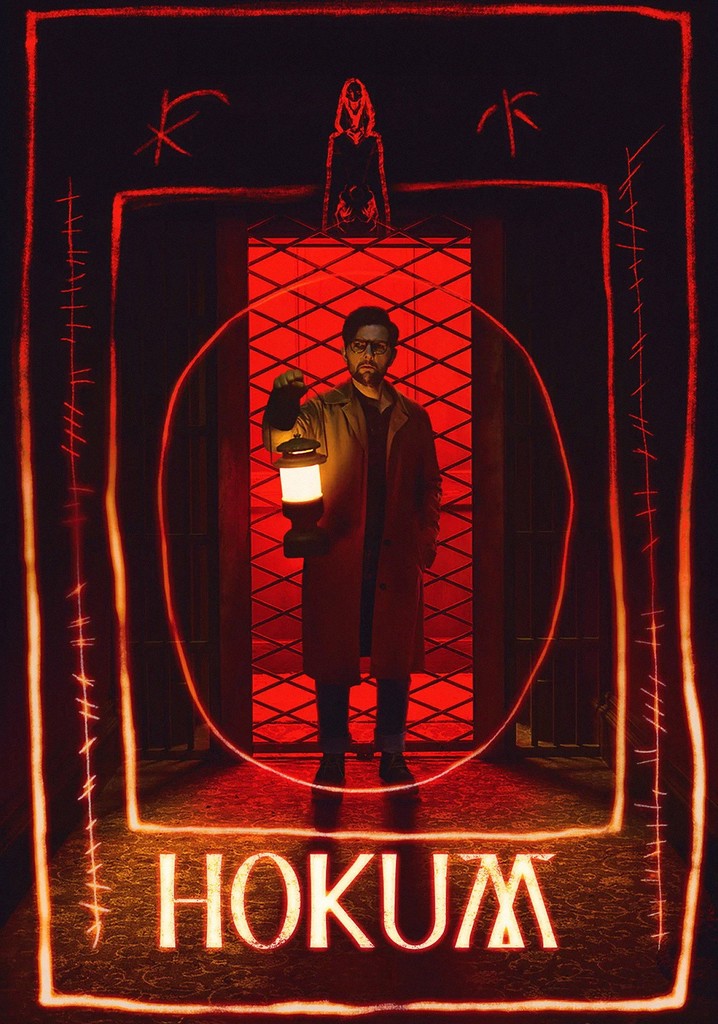

Comments ()