Billy Presley Might Just Save Us All: How Casting Gillian Anderson in Teenage Sex and Death at Camp Miasma Healed an Awkward Horror Heart
Layered, nuanced, and campy, Schoenbrun's latest wins out in many ways, chiefly thanks to stellar casting
Beware! Teenage Sex and Death at Camp Miasma is unpacked in detail with this piece, proceed with caution if you are looking to avoid spoilers!
We partner with Bookshop for all our book links. Any purchase you make through our links help support Darker Times.
In 2024, Jane Schoenbrun released I Saw the TV Glow, a film that examined the trans experience, fandom fascination, and the blurry lines between reality and the world we create for ourselves. It was a striking film for many reasons, chiefly Schoenbrun’s stylistic choices, their understanding of how deeply entwined the media we consume is with our vocabulary, and how that consumption defines our worldview. It posits that maybe there’s less of a barrier between truth and fiction than we think, and maybe we are whoever we think we can be within the context of what we love (whether that's people, places, or things). One of the biggest pillars of the film is the saying, “There is still time,” reiterating the idea that it is never too late to be who we are truly meant to be. Deeply powerful stuff, but also effective in other ways.
I Saw the TV Glow spoke to me as a fan of Buffy the Vampire Slayer, Charmed, and so many other late 90s/early 2000s television shows that were an escape from reality, even with the cheesy practical effects and dialogue. I can’t tell you how many hours I lived in the world of Sunnydale, imagining what it would be like to grapple with the literal weight of the world on my shoulders, fighting monsters and balancing personal struggles amidst a fight for the greater fate of the universe. Dramatic, right? Just another thought experiment for Anna as she struggled through Intro to Oceanography in college.
But there’s something about that specific brand of escapism that Schoenbrun understands, and they brought it to life multiple times over with I Saw the TV Glow. From the effects to the texture of the film to the basic plot structure, I got it. While the themes of the trans experience didn’t scream at me as loudly, I could certainly appreciate them. From a critical, filmmaking standpoint, I had some bumps in my viewing experience; some scenes felt a little bloated, a little lengthy for my taste. But the level of detail, care, and understanding that went into that film made me a fan. No one was telling stories as vividly as Schoenbrun.
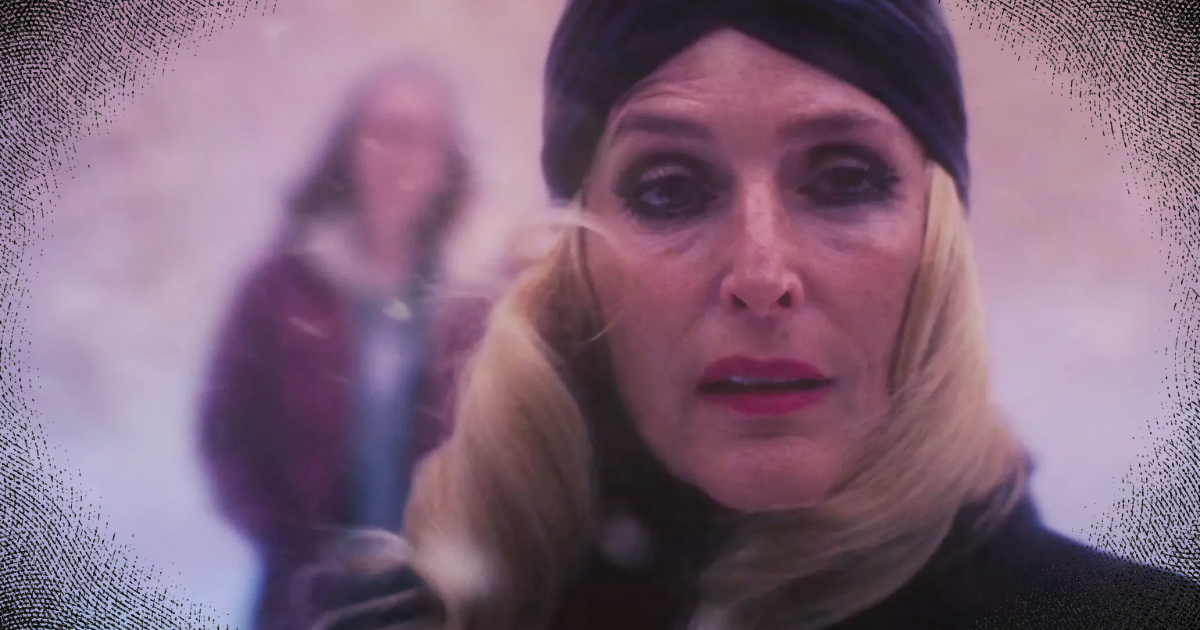
News regarding Schoenbrun’s next project began to trickle out following I Saw the TV Glow’s success. Gillian Anderson’s casting certainly grabbed my attention. I’ll digress into some important context here that will hopefully impart why Jane Schoenbrun’s work seems to speak to – no, with me so directly in Teenage Sex and Death at Camp Miasma.