We Are the Daughters of the Witches You Couldn't Film
Gretchen Felker-Martin examines the tangled web of historical fact, social anxieties, and authorial worldview in art about witchcraft.
The Darker Times Subscriber Drive is alive undead! Help us hit 500 subscribers by August 14th so we can keep our bloody beating heart pumping – for significantly less than the cost of a new coffin, you, too, can count yourself amongst our commenter coven, our bloodcurdling book club, and our dreadful Discord. Join us today – or else.
We partner with Bookshop for all our book links. Any purchase you make through our links help support Darker Times.
Dissonance between the worldview of the characters within a work of fiction and the worldview of the viewers experiencing that work is inherent to all art, whether as an artifact of time’s passage and the shifting of cultural norms or because, well, art moves between people, and people differ wildly in how they interpret both fiction and the world. You need look no further than movie review site Letterboxd or any given social media debate over the moral orientation of any given film or novel to see this in action, and perhaps nowhere in fiction is the tension between audience and art clearer than in depictions of witchcraft, a flashpoint for beliefs about magic, cosmology, religion, the New Age, and folk history. In untying the knot of what these depictions mean and how they’re received and analyzed, we can penetrate to the cultural anxieties the figure of the witch exists to sublimate.
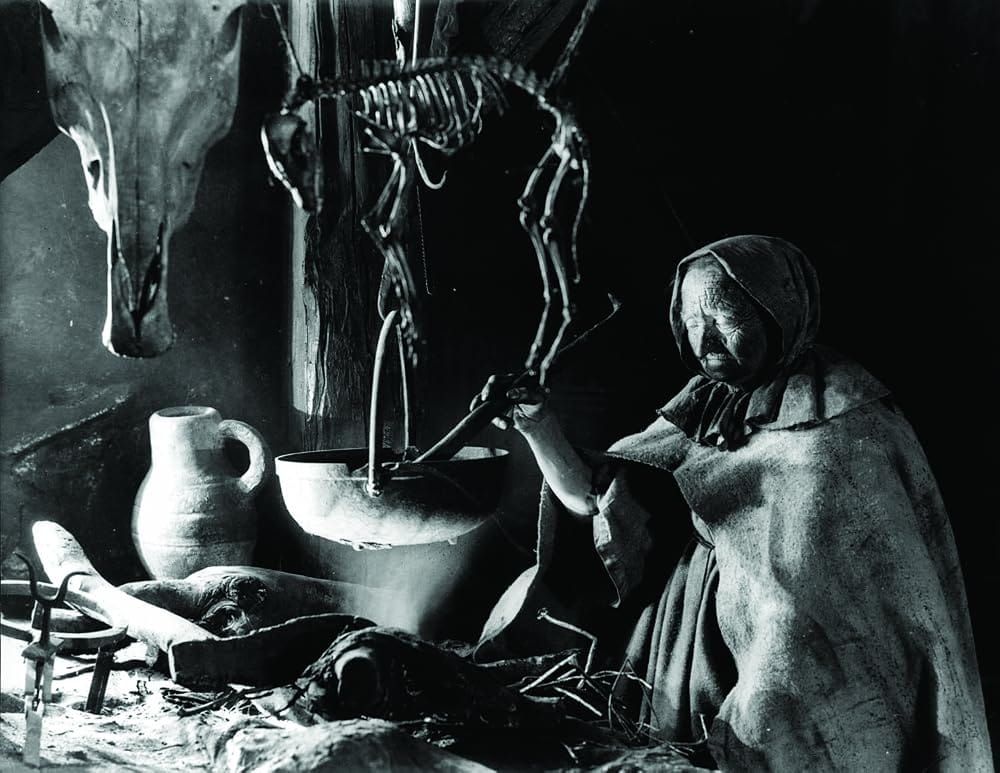
In defining the witch as she exists within the context of horror media, a few constants hold largely true: She is old, she is unkempt, and she is a danger to children. Consider the titular sorceress of director Robert Eggers’ debut feature, The Witch, as portrayed by actress Bathsheba Garnett. Toothless, wrinkled, nude, and with flyaway gray hair hanging to her waist, she might have come straight to Eggers’ set from Häxan, Viy, or any number of classic films about black magic. Near the opening of the film she kills a stolen baby and processes its body into a liniment to rub on the handle of her broom. Later, in a youthful guise (Sarah Stephens), she seduces young Caleb (Harvey Scrimshaw) and causes his death. The protagonist’s nameless mother (Claudia Martini) in Lukas Feigelfeld’s Hagazussa, accused of witchcraft by her neighbors, becomes increasingly disheveled and sexually assaults her pubescent daughter, Albrun (Celina Peter), while suffering from Bubonic Plague.
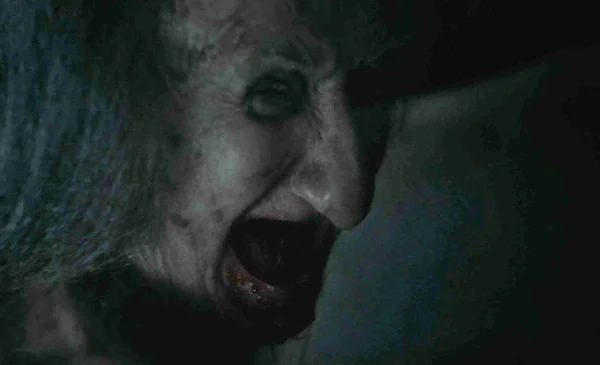
While these films may hold certain images in common, they approach the textual and subtextual meaning of those images in radically different ways. In The Witch, the titular sorceress’s presence and powers are taken as a given by the Puritan family around which the film revolves. The film, in turn, follows suit, depicting acts of Satanic depravity as matter of fact, if terrifying. Satan is real, his followers are real, and their world is set flush against the world of colonial Puritanism and shaped by its fears. Every anxiety the characters in the film hold about witchcraft and devilry is proven true by the time credits roll, a total reification of the Puritan worldview. It seems laughable to suggest that what Eggers means to convey is that Puritans had the world figured out; a film, after all, is not an educational primer. No, rather Eggers is giving audiences the much more valuable chance to step into and experience a world governed by beliefs we do not share, a world where, as Wes Craven created Freddy Krueger to sublimate anxiety over teen sexuality, the Puritan world created the witch to sublimate anxieties over women’s independence and power.
Lukas Feigelfeld’s 15-century-set Hagazussa, by comparison, leaves the in-universe reality of witchcraft deliberately ambiguous. While clearly in conversation with Eggers’ film, it focuses more directly on the ways belief in witchcraft exists as an expression of the pre-existing desire to punish isolated women. From the sadistic taunts the adult Albrun (Aleksandra Cwen) endures from the village children to her rape by villagers Swinda (Tanja Petrovsky) and Sepp (Franz Stadler), the allegations of witchcraft which dogged first Albrun’s mother and now Albrun herself clearly do not stem from a place of fear. No one hesitates to persecute or defraud Albrun, and when she does take her revenge it is not achieved by Satanic magic but by simple biological warfare: She places dead rats upstream of the village’s water supply, intentionally spreading disease. Feigelfeld’s film treats belief in witchcraft as at least primarily cynical, a prejudice born of other prejudices.
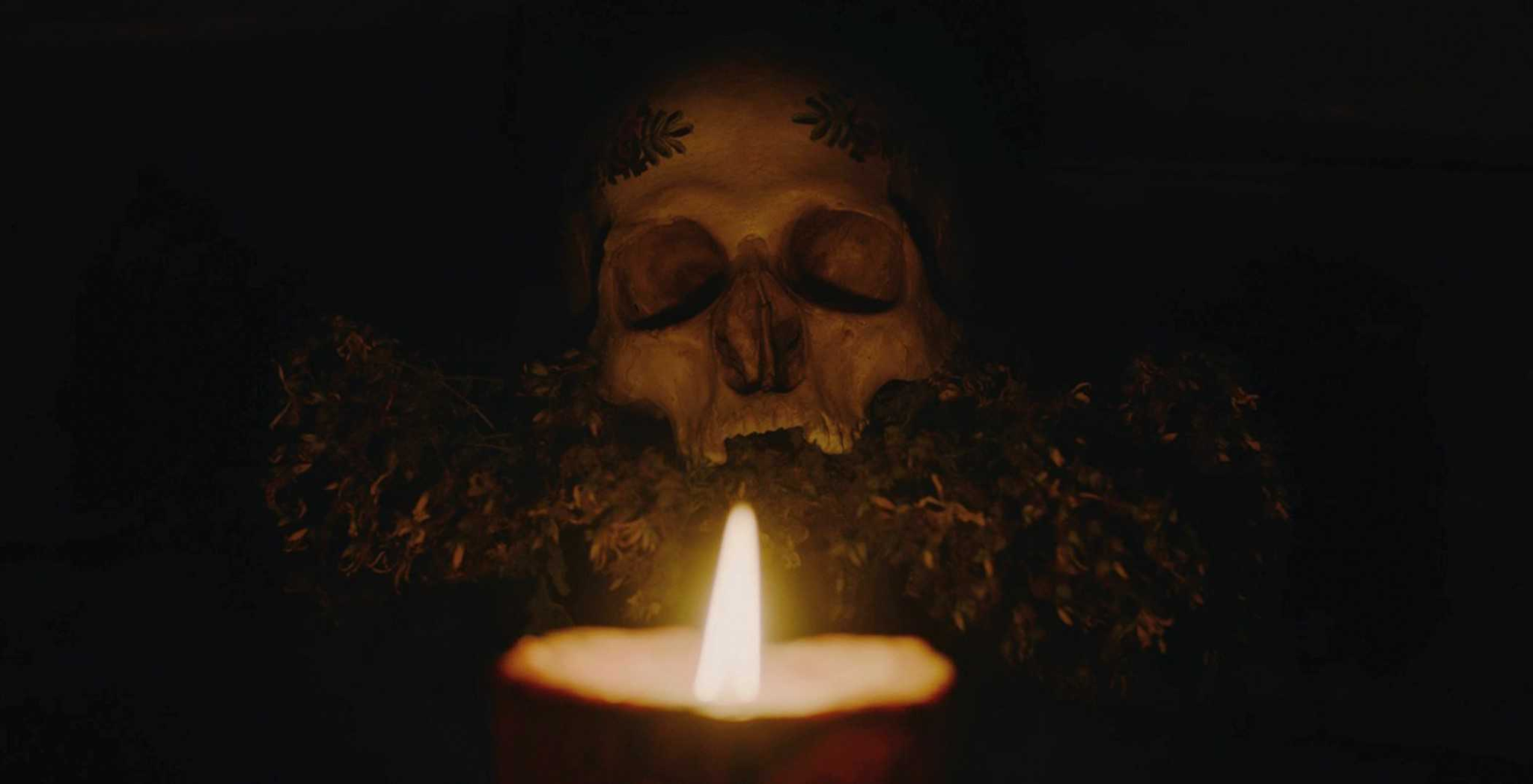
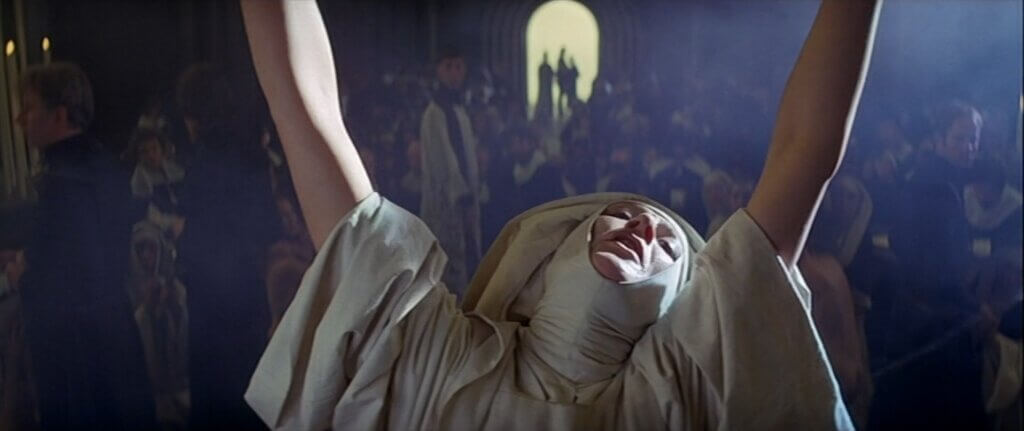
Ken Russell’s infamous 1971 film The Devils — and the Aldous Huxley novel The Devils of Loudon, from which it was adapted — takes a step back from this intimate framing to position accusations of witchcraft as the sole province of ethically bankrupt political operators and libidinal fanatics eager for a bad-faith mechanism by which to disenfranchise enemies or potential victims. When the power-hungry exorcist Father Barre (Michael Gothard) gloatingly cites the testimony of Satan himself, who according to Barre is bound to tell the truth “when duly constrained by a holy exorcist,” the accused Father Urbain Grandier (Oliver Reed) volleys back, "Lies! Lies and heresy! The Devil is a liar and the father of lies. If the Devil's evidence is to be accepted, the virtuous people are in the greatest of danger. For it is against these that Satan rages most violently.” In the language of a 17th-century theologian, Grandier expresses textually the same idea Feigelfeld approaches subtextually: that accusations of possession and witchcraft are a pretext for the seizure and abuse of power, albeit on a national scale rather than a strictly personal one.
Russell’s film is notable in that, on a textual level, no witch ever appears onscreen. The testimony of obscene rites and rituals carried out by Grandier, as relayed by the sexually repressed and disturbed Sister Superior Jeanne of the Angels (Vanessa Redgrave), are pure fantasy. Notably, Jeanne's on-screen sexual fantasies are Biblical rather than Satanic, with Grandier-as-Christ walking on water or descending from the cross so that she can tongue the wounds in his side and palm. When Grandier transgresses by taking a wife in defiance of his vows as a priest, Jeanne impulsively punishes him with inverted versions of her own imagined sins, which in turn are seized upon as pretext for Grandier’s removal from his politically inconvenient posting as Loudon’s interim governor by the ambitious Cardinal Richelieu (Michael Logue). The idea of the witch has personal utility for Jeanne as a means of distancing herself from her own obsessive thoughts and lashing out at those over whom she has no power, but it also has cultural utility for the state and its actors as a way to direct public malice.
Absent from these films, though present in work like serial predator Marion Zimmer Bradley’s seminal novel The Mists of Avalon and the academic writings of Sylvia Federici and her predecessor, the thoroughly debunked Egyptologist and historian Margaret Murray, is the misguided idea of the witch as healer and midwife, keepers of real knowledge and in some cases actual magical power. In attempting to reclaim a dubious symbol of feminine oppression (the witch trials did primarily target women overall, but men and children made up a significant minority of the accused), this approach elides the actual women who suffered and died as a result of the trials, who shared the Christian beliefs and culture of their accusers, and who often became accusers in their own turn, or had accused others of witchcraft in the past.
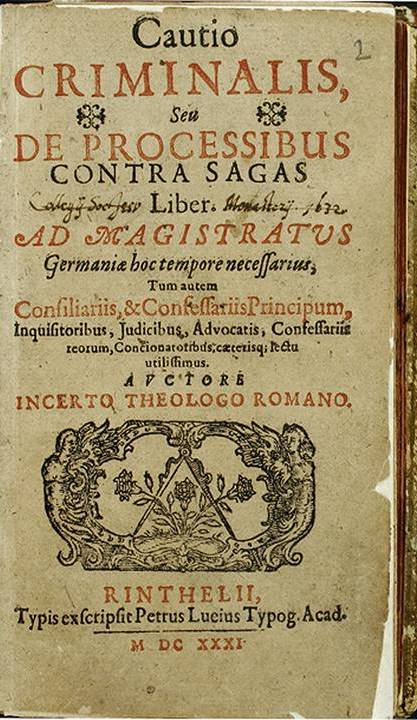
Although their own beliefs are nominally orthogonal to those of authors like Murray and Bradley, fundamentalists such as private investigator and morality crusader Patricia Pulling, founder of Satanic Panic mainstay B.A.D.D. (Bothered About Dungeons And Dragons), arrive at essentially the same conclusion. Both groups believe that witches were (or even are) real, though where Murray espoused academic curiosity and sought to incorporate witches into the history of feminism, Pulling and her ilk reconcile the question of witchcraft in art in the most straightforward way possible: any depiction of witchcraft in art is in itself witchcraft, and must be destroyed lest it contaminate our innocent children. As we are not plague-stricken religious fanatics casting about for explanations as to why our crops have been blighted, we may mercifully discard this interpretation of reality and thus save ourselves from inevitably turning on one another. As disillusioned Jesuit confessor Friedrich Spee put it in his treatise in defense of those accused of witchcraft, Cautio Criminalis, “No end will be found until everyone has been burned.”
Through the lenses of these various works, the icon of the witch can be broadly understood as an expression of different anxieties about female power and liberation from patriarchal rule, not entirely dissimilar from the archetypal “Stacy” discussed by incels. (Though in the case of the incel, their anxiety is so intense that these symbolic women are not liberated from patriarchy, but instead subjugated by its more conventionally handsome and domineering beneficiaries – a real "hat on a hat" situation for our era’s crisis of masculinity.) In choosing how to frame the witch in works of art and academia, we can explore, subvert, and critique these anxieties without stumbling into the trap of flattering our own beliefs or engaging in historical revisionism. The angle at which even the most incendiary and contentious images and stories are shown can change their meaning entirely and offer us the opportunity to expand our understanding of human history and our fixations as a species.
 Gretchen Felker-Martin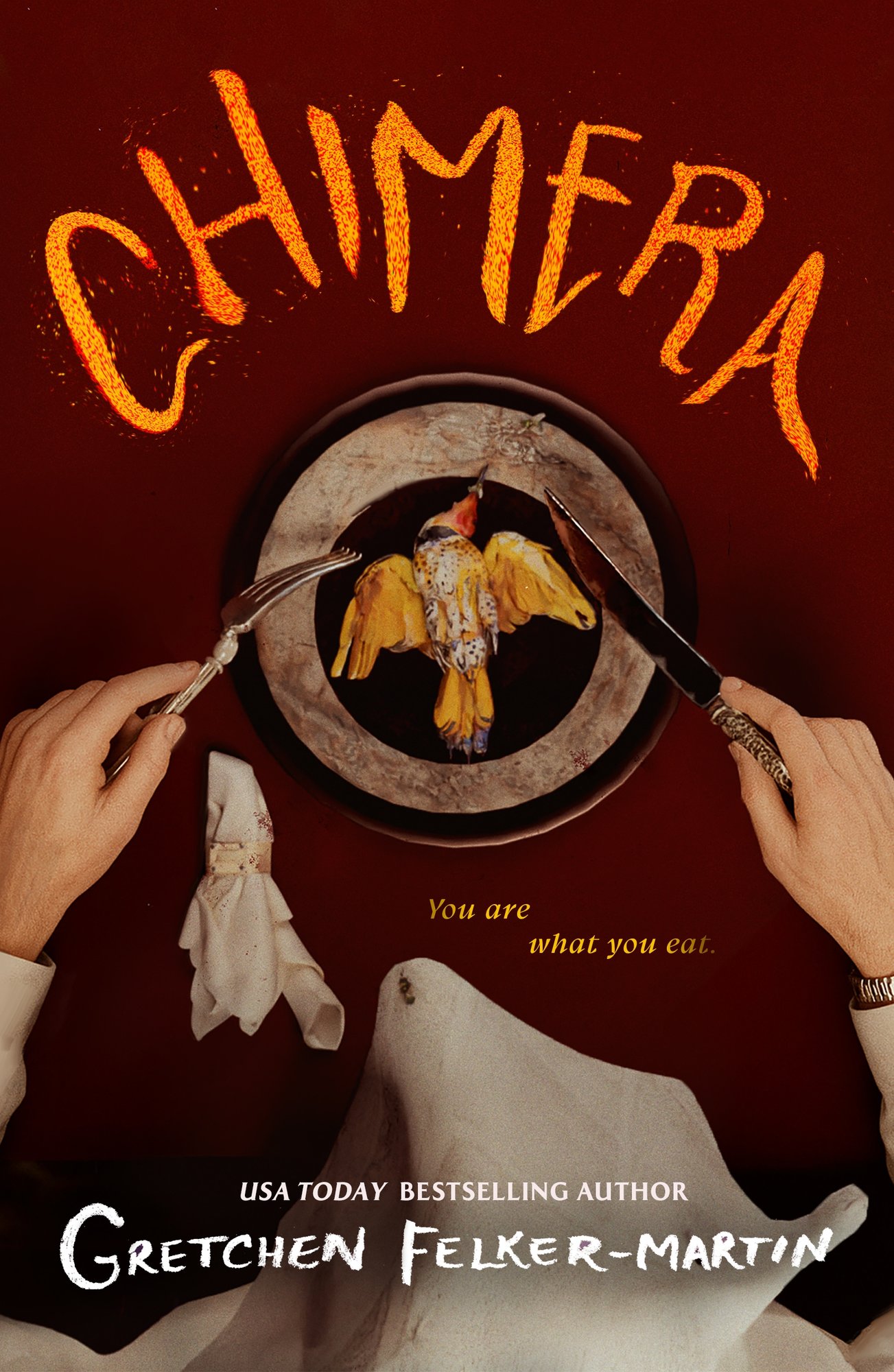
Comments ()