The Need to Believe
Anna Dupre on The X-Files, belief, and feeling recognized in horror.
“I want to believe.”
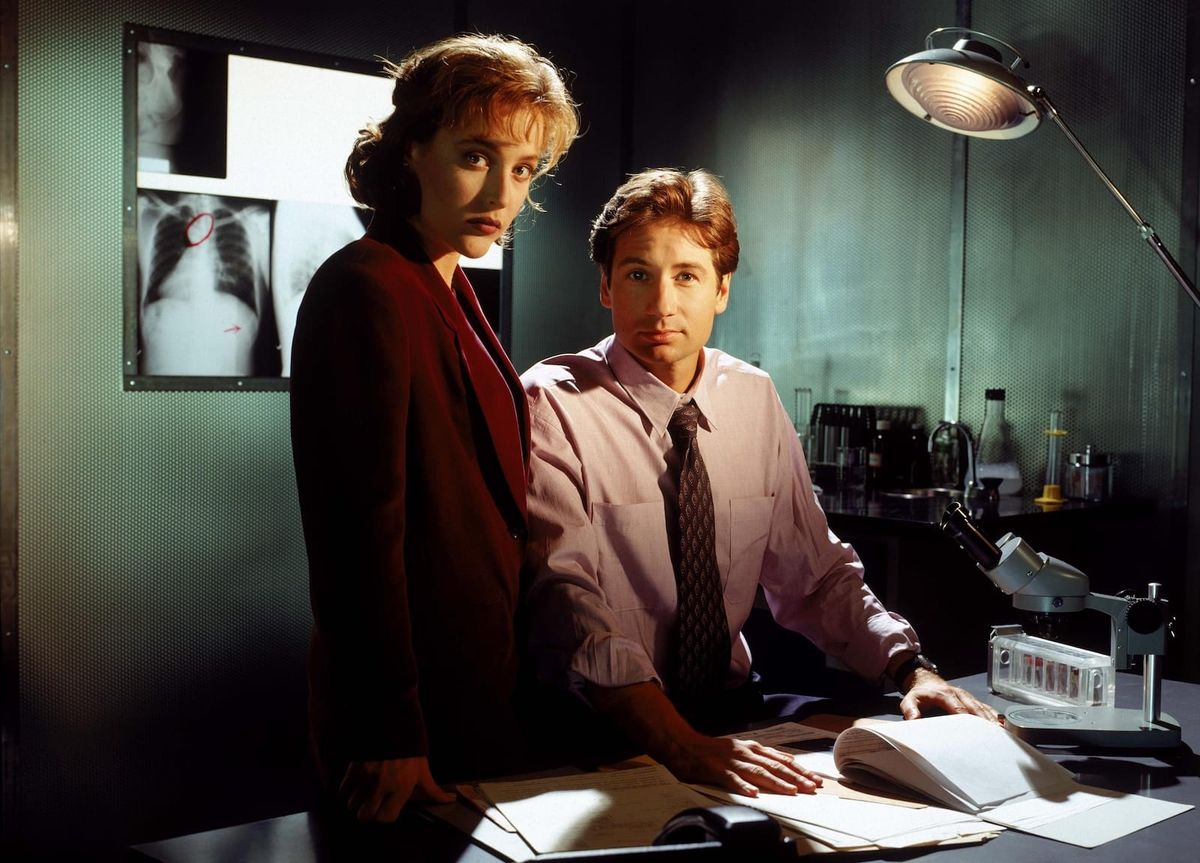
A simple sentence, just four words made iconic by the 1993 sci-fi television series The X-Files, has become the foundation upon which I have built my love for the horror genre over the last three years. While I first discovered Mulder, Scully, and the Cigarette Smoking Man back in 2013 or 2014 when I was home sick with a terrible bout of the flu, it wasn’t until much later (now) that I realized my love affair with horror potentially began all those years ago. Trying to track down the nexus of my infatuation, where my horror DNA formed, feels like one of the murkiest mysteries of my own mind, but I do think my desire to believe, to look into the dark, to want to uncover what would rather stay hidden has always been there. Now, though, it’s been brought into the light.
The concept of believability is a feral beast that shakes and shifts no matter what cage it’s locked in. For women, not being believed is a far more common experience than being believed. It’s something that we prepare for, wrestle with, and even alter our own reality in order to survive. We’ve been conditioned to not complain, to explain away, to understate, or to mutate to fit a narrative that is simply more palatable. But, what The X-Files offers to us is a set of characters, both a man and woman, who contend with what it means to believe, not just in the supernatural, paranormal, and otherworldly, but the very real issues that plague our world today: conspiracy, loss of autonomy, espionage, lies, control, fear, terror, and deceit.
While teenage Anna back in 2014 didn’t understand what she was in for when she entered the “real world” or just how impactful a sci-fi television show would prove to be, Fox Mulder’s desire to understand the truth of the world around him resonated deeply. Dana Scully’s intellect, tenacity, and resilience spoke volumes to my young female self, proving that women could penetrate male-dominated spaces with finesse and grace. She’s brilliant, she’s articulate, and most of all she’s logical, a trait that resonated with my then-sheltered self. But in growing older, in experiencing more of this world’s darkness and sharpness and teeth, my desire––my need––to believe only grew - not in little gray men or the Loch Ness Monster, but in humanity.
Twelve years later (hello twenty-something-Anna), this need to understand belief and its many variables escalated. Maybe it was the overturning of Roe v. Wade, maybe it was entering the workforce and seeing (and experiencing) gender disparagement, or maybe it was one of a multitude of other experiences that took my psyche to a dark place, but one thing was for certain: I didn’t want to be alone. And, thankfully, some stranger on the internet, back when Twitter was still a hot place to be, posted about Rachel Harrison’s Such Sharp Teeth. In the novel, main character Rory has to contend with loss of control and her past traumas in order to see another day. That it was told through the lens of a modern werewolf narrative? Well that certainly caught my attention, more so than the recent Stephen King books I had picked up (sorry, Christine just wasn’t cutting it).
In the pages of Harrison’s novel, I found so much more than I could have imagined: company, understanding, excitement, and most important of all, hope. A huge pillar of this novel is the concept of who gets to be believed. As Rory wrestles with disclosing her trauma to those closest in her life; we see her struggle and eventually find peace with herself. I saw what modern horror fiction could offer concerning the female experience, and I was hooked. I became absolutely ravenous for stories like these, the ones who offered to sit next to me in the dark and say, “I believe you.” This led to discovering authors like CJ Leede, Gemma Amor, Tanya Pell, Liz Kerin, Monika Kim, and Catriona Ward (to name a few), pushing the boundaries of my comfort zone through the best means possible. Nearly every book I subsequently picked up felt like my favorite X-Files episodes while also holding my hand. Horror felt like home.
Since then, horror fiction has become my undeniable passion.I continue to find comfort in its pages, and in conversations with the authors who create such meaningful narratives. Their interrogation of believability and the way our society handles (or doesn’t) such issues feels paramount and exactly what 2014 Anna never knew she needed. Horror fiction has been the best company to keep, my closest friend, and my forever conversation partner. I can undoubtedly say that I still want to believe, all these years later, not in the improbable (okay, maybe sometimes), but in the people we share this earth with, those who are willing to walk side by side with us through the darkness and who look for the light.
Hailing from the South and deeply devoted to all that is dark and disturbing, Anna Rose-Dupre Landry (she/her) is a horror fanatic who is obsessed with the latest and greatest horror fiction, the female-identifying experience, and the confrontation of norms in our current social landscape. She spends her days interviewing some of the biggest names in horror fiction for her podcast Anna Rose Reads, interrogating her relationship with fear through her writing, and attempting to keep up with the latest genre films and television shows. You can expect many think pieces, personal anecdotes, and all The X-Files references your heart can desire in her writing. Anna lives in Louisiana with her husband and their dog/center of their universe.
Comments ()