Do You Guys Ever Think About Dying?
Rachel Harrison on anxiety, horror, and coming to terms with her inevitable death.
Welcome! You’ve come to Darker Times during a strange and special time: 💫 the Darker Times Subscriber Drive 💫. We’re trying to hit 500 paid subscribers by August 14th or else we will all be hunted down and skinned alive in our beds. Ha! We kid. But not really. To keep Darker Times running, we need money—hot, wet, bloody money—to keep the lights on and the words flowing. If you like this post or even if you hate it, consider subscribing in exchange for great, funny, analytical horror coverage.
We partner with Bookshop for all our book links. Any purchase you make through our links help support Darker Times.
I was certain I was going to die in March. I’d had my suspicions before, bouts of vague foreboding, but this time, this time, I was sure. I felt it in the vibration of my bones, the frantic swimming of my blood, the weighty beating of my cowardly heart. I felt it in how I looked at my life, and at the people in it—every second bursting with gratitude as I grasped for moments slipping through my clammy hands. When I looked at myself, at my reflection, I saw a forgone conclusion. I saw someone who never appreciated anything enough. I saw a dead woman. I knew that when I got on the plane to Tucson for the book festival, that plane was going down. I just knew. When the turbulence hit, I thought about the words I’d never said, the things I’d never done, and how much I loved my husband and my cat and my friends and my family and everything. Life. When the plane landed in Denver for my connecting flight, I thought, shit. It’s the next one. I imagined my body shish kabob-ed on a cactus in the Arizona desert, having fallen from the sky. I prayed to Blucifer, picked at my cuticles until they bled. When I arrived at my final destination unscathed, let me tell you, no born and bred Jersey Girl in the history of the world has ever been so elated to have landed in Tucson. The relief was fleeting. As I write this, I’ve got a flight out tomorrow to spend a week out in nature, so, we’ll see. If the plane doesn’t crash, I might get bitten by a poisonous snake or catch a brain-eating amoeba from a contaminated puddle, or, or, or, or, or…
Having gotten this far, you might have already gleaned that my mental health is questionable. For the first thirty years of my life, depression was the big bad. Yes, I had anxiety, but it was smothered under an unyielding sadness. It was a lackey, Igor to Dr. Frankenstein. My anxiety liked to say things like “Did you lock the door?” “Did you leave the faucet running?” “Is (blank) mad at you?” “Remember that thing you said at dinner? That was very stupid and everyone thinks so!” “Remember how nothing is within your control?” All this fed into my depression, the duo in lockstep, tag-teaming feelings of worthlessness and despair.
I wrote my first horror novel, The Return, at twenty-eight. The original flicker of an idea was: what if The Shining took place somewhere uber-kitschy like The Madonna Inn. From there, the book surprised me. It became about the things that kept me up at night—primarily, my anxiety around my friendships and how they were unfolding in my twenties. I feared losing my friends, I feared my own aimlessness, my dismal finances, my inability to trust myself. Those fears seeped into the writing. It was a thrilling, cathartic experience. Horror allows you to be messy and mean, to be raw and ugly, things I never felt permitted to be in my everyday life. From there, I went on to write six more novels that all dealt with some facet of my anxiety, my angst.
 Rachel Harrison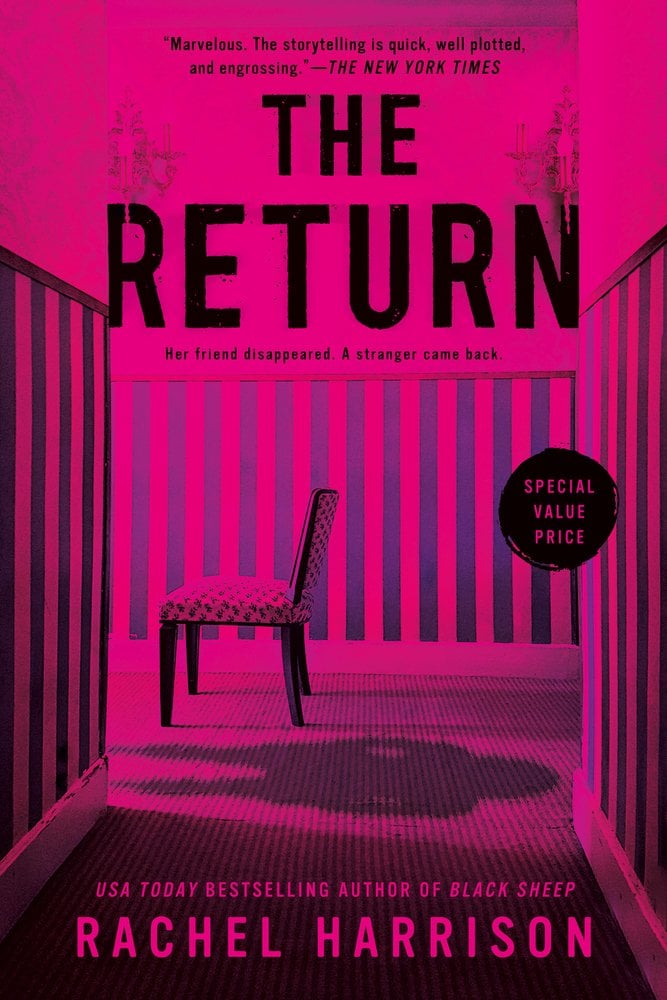
Over the last several years, I’ve found immense solace in the genre (and Lexapro! I’d be remiss not to mention the Lexapro). As a scaredy-cat latecomer to horror, immersing myself fully in it has been the greatest adventure. I discovered the bloody fun adrenaline rush of slashers when I read Clown in a Cornfield by Adam Cesare and Cirque Berserk by Jessica Guess. The delicious, righteous anger in The Year of the Witching by Alexis Henderson and Such a Pretty Smile by Kristi DeMeester. I fell in love with finding random movies on Shudder on a Friday night, going to genre film festivals like the Telluride Horror Show and Anomaly in my beloved Rochester, eating popcorn for dinner and hiding my eyes behind buttery fingers during gory scenes. Discovering new horror through podcasts like Books in the Freezer and She Wore Black and Talking Scared.
The joy and release I’ve found in horror—in writing it, in consuming it—is tangible. It’s real. It’s so redeeming as someone who always worries the worst is going to happen to see that, yeah, sometimes it does! What of it? That sucks! Deal with it! As someone who feels pressure to be pretty and polite, it’s freeing to see validity in being loud and vicious. Horror provides an escape from the harsh realities of the world with something harsher, a needed reminder that we might not have it so bad. Oh, you’re grumpy on the phone with the pharmacy trying to sort out a prescription, Rachel? You could be getting possessed by an ancient demon. How about that? There’s true value there, in that perspective, in participating in these exercises of extreme circumstance. We metabolize the art we engage with; it becomes part of us and informs how we move through the world.
But for all its marvelous catharsis, horror is not a cure-all. Ugh. So inconvenient.
I imagine my mental illnesses like a masked killer from an iconic slasher walking—not running, never running, walking—behind me. I’m running as fast as I can, but I know it will catch up to me eventually. It always does. And it’ll get me, and drag me down, and I will fight. And maybe I’ll win, earn the chance to keep running. Or maybe next time will be the time I don’t win, that I lose my Final Girl credentials.
My anxiety, no longer Igor, now more the Freddy to my Depression’s Jason, has been relentless in its flamboyant antagonism. Sometime over the last two years, my anxiety has gotten the reboot treatment. It’s so much fucking worse. And for the first time in my life, it’s come alone. I’ll be going about my day, happy as can be, la la oo look at that I’ve got some Poppi in the fridge, Shirley Temple flavor, my favorite! Close the fridge to a jump scare. There it is, stabbing me in the chest! Suddenly, I’ll feel like the world is about to collapse on top of me. This suffocating, consuming sense of doom. I’ll be on the kitchen floor crying thinking about death. My death, the deaths of everyone I love. One-two, it’s coming for you…
Some days I wake up in the morning, see my cat at the foot of the bed, and break down in tears anticipating her death. It’s a waste of our precious time together. I know this. And yet. This new anxiety has made me hyperaware of time, of how quickly it’s disappearing, of how powerless I am to stop its swift march. I know it’s the anxiety. I know it’s my brain, this sinister form of self-sabotage, that the call is coming from inside the house. But classifying this perpetually intensifying anxiety as a premonition of impending doom somehow makes more sense than the likely truth—which is, it’s either thanks to mid-thirties hormonal fluctuations (talk about horror), or spurred by some recent friend & family health crises, or for no reason at all. Anxiety is a franchise villain. It doesn’t abide by logic.
The writing helps. On the page, I have control over it all. My anxiety, my fear, my melancholy, everything. I decide what happens and, most of the time, how it feels. I make the monsters. They do as they’re told. There’s shelter inside it. There’s beauty. I’m playing dolls, and the dolls go through hell and come out the other side, and I think, well, maybe I can too. Maybe it won’t be easy, but maybe it will be okay.
That used to be enough. Used to be. My problem is, I’ve got now this evil, super annoying voice in my head constantly whispering about death. Obviously, when consuming horror you’re confronted by death repeatedly. But it’s expected, and often your suspension of disbelief is engaged, because it’s fiction, right? In the past, I had a level of dissociation and/or desensitization that I’ve now completely lost access to.
As my progressing anxiety has forced me to ruminate on death, I think of the horror that engages with it head-on. This Thing Between Us by Gus Moreno, Ghost Eaters by Clay McLeod Chapman, and Headlights by CJ Leede are all stunning, scary novels about grief. About confronting death. I think about Pet Sematary, I think about zombies, about ghosts. What other genre better prepares us for life’s cruelest twist?
I used to describe my relationship with horror like pressing on a bruise. It was a means to experience my more elusive, complex feelings, to confront those emotions, study them, learn from them in a safe environment. When I shut my laptop, or put the book down, or left the theater, or turned off the TV, or removed my headphones, it was over, and I could go about my day. Since my anxiety no longer allows me to do that, to disconnect from those complex feelings—dread, panic, shame, cosmic confusion—my relationship with horror has shifted. There’s no escapism in it for me. Not really. Not anymore. We’re well past the honeymoon phase. It’s seen me cry my makeup off at two-fifteen PM on a Tuesday, hyperventilating, telling it to please move on after I die but don’t forget about me. We’re in it now.
But horror is also the only thing that gets it, that meets me where I am. That says, “Uh, yeah. Death is inevitable. What of it? Here’s the world’s tiniest tiny violin!” I’m not typically a fan of tough love, but I am just a little-itty-bit spiteful, and there’s something glorious about sticking it to my anxiety in this way. In taking back control and confronting the evil whispers with screams. It’s more than exposure therapy, more than an exercise for me now. It’s acceptance. (Or at the very least, it’s leading me toward acceptance.) The genre that I call home, that I’ve dedicated my life to, continues to surprise me in the depth of its understanding. I don’t believe everything is beautiful because we are doomed. I believe it’s a goddamn miracle that we may find and savor the beauty and joy and love and connection, savor life, despite the ticking clock.
So, when I do meet my inevitable end, whether it be on the flight tomorrow, or sixty years from now in a dusty care facility choking on a butterscotch candy (one can only hope), may I greet the Grim Reaper with a shrug. What’s to fear? I already know what he looks like.
Rachel Harrison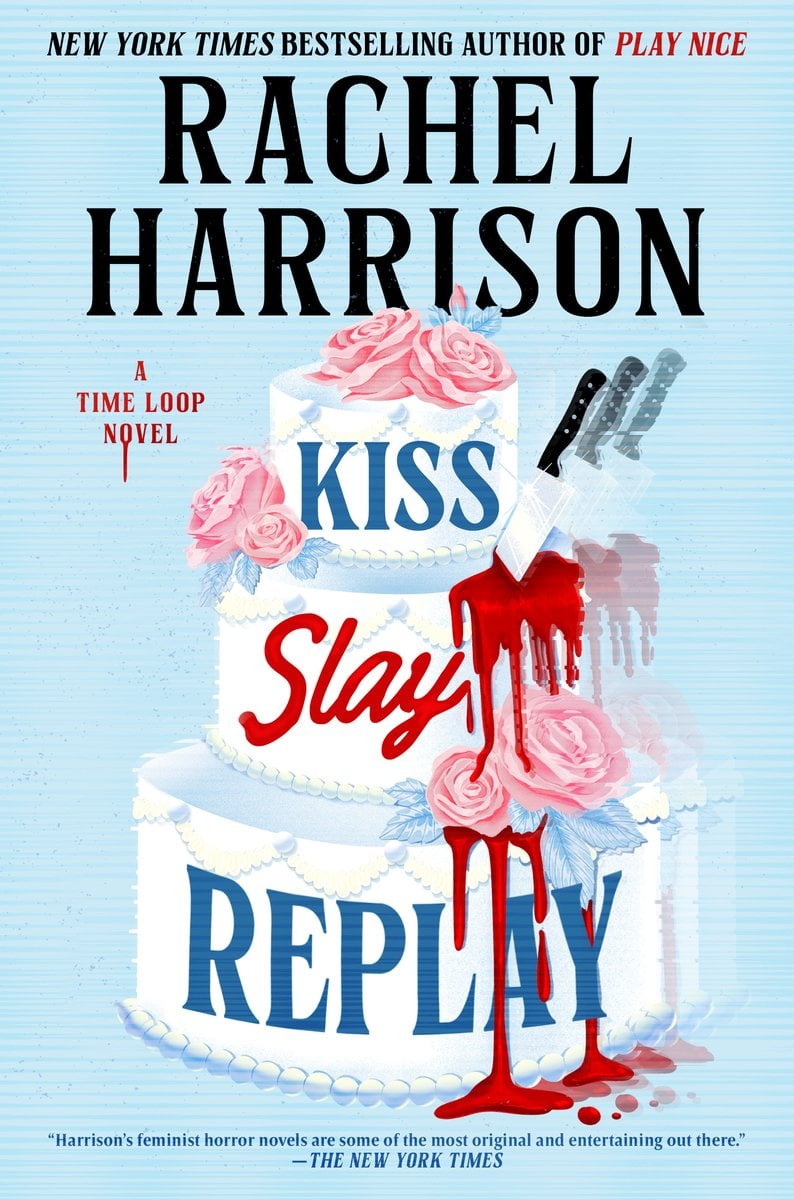
Comments ()