Let Them Fight: Men (2022)
Fascinating folk horror or f*cked up gender commentary? Alex Garland's surreal and divisive film gets the Let Them Fight treatment.
Welcome! You’ve come to Darker Times during a strange and special time: 💫 the Darker Times Subscriber Drive 💫. We’re trying to hit 500 paid subscribers by August 14th or else we will all be hunted down and skinned alive in our beds. Ha! We kid. But not really. To keep Darker Times running, we need money—hot, wet, bloody money—to keep the lights on and the words flowing. If you like this post or even if you hate it, consider subscribing in exchange for great, funny, analytical horror coverage.
We partner with Bookshop for all our book links. Any purchase you make through our links help support Darker Times.
Welcome back to Let Them Fight, a recurring series where two or more Darker Times staffers sit down and have a civil (but not boring) conversation about a piece of art they disagree on. Today’s combatants: Jessica, who HATES Alex Garland’s Men and possibly would not have started a business with Emily if she had know that Emily fucking LOVES it.
Spoilers follow for Men (2022) and, semi-unexpectedly, Tana French’s In The Woods.
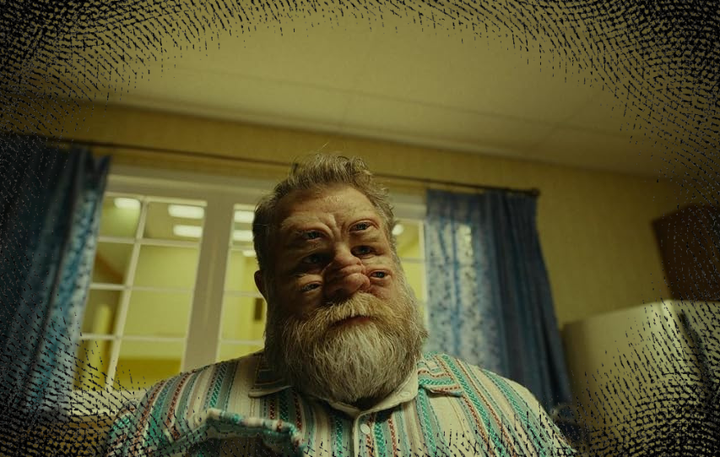
For those who haven’t seen it: Men tells the story of Harper (played by the inimitable Jessie Buckley), who travels to the English countryside to recover after her attempt to break things off with her emotionally abusive husband ends in his (maybe) suicide. But Harper’s attempts to find some kind of peace are thwarted over and over by the men of the village, who follow, berate, and torment her—and all of them are played by Rory Kinnear. What follows is hallucinatory, violent, and, frankly, pretty batshit, with nods to the Green Man legend, small town English syncretism, and that most universal of human terrors: when Rory Kinnear keeps getting closer and closer to you (aka Rory Kinnearer).
Let’s fight!
Emily: So this movie was one of the first things Jessica and I realized we really, really disagree about, and I’ve been excited for months to finally do this edition of Let Them Fight, not least of all because it gave me an excuse to watch the movie again. My love for Men has not lessened over repeat viewings; it seems to have been made in a lab for me, specifically. I love folk horror; I love horror that digs into some kind of societal ill without being too didactic about it; I love rural English villages; I love the Green Man (regardless of how ahistorical he is); I love art history. I love Jessie Buckley. I love when Rory Kinnear gets to be a weird little freak, and I especially love when Rory Kinnear gets to be eight different weird little freaks in the same movie. I love hypersaturated green; I love the simultaneous depiction of the natural world as healing and threatening; I love how this movie taps into a particular strain of the bucolic English Weird that’s existed since Arthur Machen and Algernon Blackwood, at least. And I love the bonkers recursive mpreg nightmare sequence in the final act. I could go on and on (and probably will), but Jessica, the floor is yours: why do you hate this movie so much, and how do you live with yourself?
Jessica: What’s funny is that I enjoy almost all of those things as well. And there was a short period when I watched this movie for the first time when I thought, Hey, I might like this. It didn’t last, obviously.
For starters, if you make a movie and you call that movie Men, and men play all the menacing/creepy roles in the film, I assume that you have something to say about gender. If you are a man and you wrote and directed a movie called Men, then I would hope you’ve spent some time considering what that something is that you want to say and how people of all genders will respond. But the feeling this movie gives me is that Alex Garland led us all into a room, locked us in, set off a gender grenade, and now he’s watching it all play out from a secure location, chuckling to himself. The film feels like it’s trying to get a rise out of me the way a boy on the playground in 5th grade would.
The bonkers final act sequence feels like something we should come back to to talk about in more detail, but what irks me so much about this movie is that it sure seems to be saying in that sequence that when Harper sees all these men everywhere that what she has seen all this time as a threat is just a man asking to be loved. A man who catcalls you on the street, he just wants to see your beautiful smile! Your husband who hit you, well, he probably didn’t mean it, and you should let him apologize just in case he kills himself. It felt insulting, as a viewer, to get this conclusion, especially after the purposeful provocation of all the buildup.
I wish it had been the folk horror without All The Gender. I picked up more of the folk horror elements on my second viewing. I watched it so focused on the “men” of it all the first time, and I think I would have liked this much more if it was a slightly different movie called Green Men or Green Man or Don’t Go to the Countryside to Process Your Trauma.
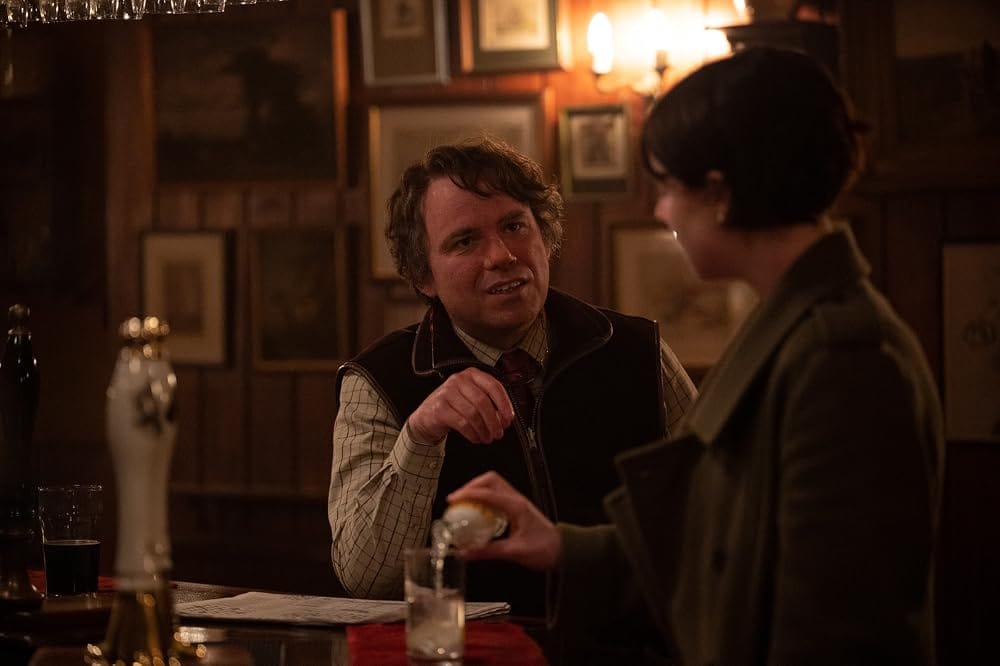
Emily: See that’s so interesting to me—my perception of the movie’s Big Gender Message is almost exactly the opposite. As with Curry Barker and Obsession, I think Garland makes a point of showing over and over that the way all these men treat Harper is the result of unchecked entitlement and loathing. So my read on what we’re seeing here is that because of Harper’s very recent, very awful trauma, she’s viewing all the men around her exclusively through the lens of the myriad ways they’re trying to curtail her agency or cross her boundaries. They all want something from her and are either indifferent or actively hostile to what she wants for herself. What they want varies—the vicar wants the kind of sex that functions as punishment, the little boy wants attention in the form of a predator/prey game, the naked man wants… well, violence, probably. In the pub scene, Geoffrey insists on paying for her drink over her repeated protestations, and the male police officer dismisses her fears of the naked man who pursued her earlier. But these actions and motivations all come from the same place: an inability to fully recognize a woman’s humanity and independence and an instinctive prioritization of their own desires over hers.
In the flashbacks to Harper’s final fight with her husband, James (Paapa Essiedu), we get a pretty clear depiction of him as controlling, abusive, and emotionally manipulative. What James wants, in classic abuser fashion, is to possess Harper entirely, leaving her no agency or choice in her own life. He wants to possess her even after he’s gone, to haunt her.
And I think it’s also key that Harper is a woman who’s not afraid to stand up for herself. When James first threatens to kill himself if she leaves him, she clocks what he’s doing, names it, and rebukes it, saying, basically, You don’t get to put this on me. When the vicar tries to assign her guilt and blame for James’ death, her response is a snarled “Fuck off,” and later, when he tries to force himself on her, she stabs him in the gut. Every time she’s knocked down, she gets right back up. She’s very guarded around all the male characters in the film, even before she has overt reason to be. When Geoffrey is first showing her around the house she’s renting, he asks her if she plays the piano, and she says no, but later, when she’s alone, we see her play Chopin from memory. Why? My guess is because she didn’t want to be pressured into playing something for him. I think most women have had that experience pretty regularly: I’m going to tell a white lie so I can end this uncomfortable interaction as soon as possible.
So, finally, at the end, the Rories Kinnear exhaust themselves, and she’s alone with the specter of her late husband. She asks him what he wants from her. He replies “Your love.” I don’t think we’re meant to receive that as an honest accounting from him! I think it’s his warped idea of what he thinks he wants from her. And her response, which is an exhausted “... Yeah,” pretty directly resonated with me not as acceptance or surrender but as an illustration of the death-by-a-thousand-cuts feeling of having to navigate a world where men just want things from you all the time, even if they don’t understand why they want those things.
Now, I’m not going to stand here and say our boy Alex Garland has perfect insight into the experience of womanhood. I love basically everything he’s ever made (except for Devs, which was fucking stupid), but I do think he tends to prioritize emotional effect over clarity of message—the lighthouse fight scene at the end of Annihilation is kind of a perfect example. Am I right in remembering that you are decidedly not a Garland fangirl?
Jessica: I am not, it’s true. It took me a long time to accept it. I read Alex Garland’s novel The Beach more than 20 years ago and I liked it enough to follow his career, even though he kept making things that I liked fine or almost liked. I was really excited when I found out he was adapting Annihilation! It was only after that movie came out and I did not enjoy it that I started to consider that I didn’t like Garland. Since then it just keeps getting reaffirmed.
I have to quibble some, because I don’t think it’s totally clear that all the Rory Kinnears are entitled bad guys. For everything threatening, there’s also something nonthreatening. This was something I really noticed the second time. This wandering man is naked and trying to get in her house, on the other hand he’s a mentally ill unhoused man who hasn’t hurt anyone. The vicar is religious and moral authority, but he presents softly with a listening ear and long hair. The kid is angry and seems capable of who knows what, but he’s also just a kid while she’s an adult. All of this feels very purposeful, this balancing. On the one hand, I agree that this is a very recognizable experience of being a woman in the world! On the other, the only time where there’s a really clear physical threat to Harper is when we’ve moved firmly into surrealism territory, and it’s unclear how real any of this is meant to be.
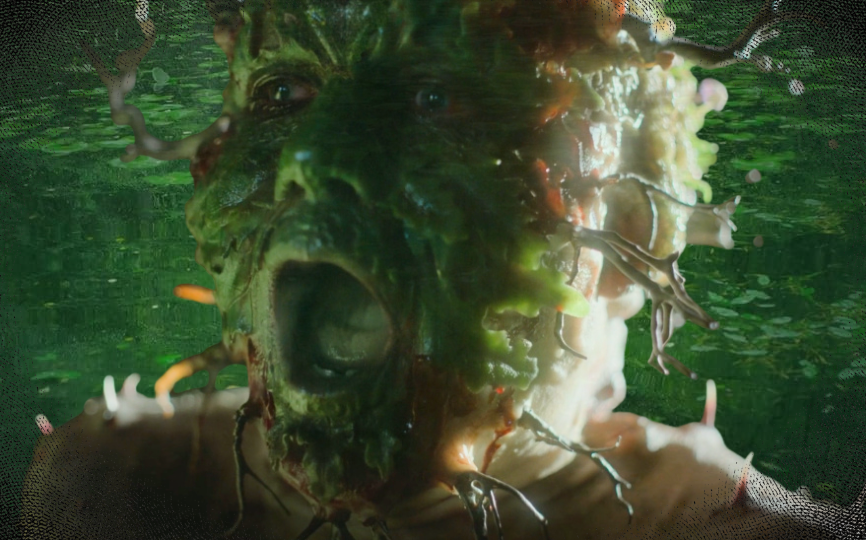
The men are tied to nature, with creepy naked Rory Kinnear presenting at the end as that Green Man with leaves poking out of his skin. He is nature, he is pagan, he is archetypal. He feels like something that cannot be changed, something that must be succumbed to. To me that doesn’t read Entitled Asshole, it reads Force of Nature.
And then, well, there is the “men giving birth to other men over and over” sequence. Which is clearly there to provoke the audience, but it’s not clear what it’s supposed to provoke us towards. Garland really loves a close up of each of these births; I felt like I was in 7th grade sex ed again, watching a video of a baby crowning. When Jessie Buckley ran into the house I typed in my notes, “Girl, I feel you.” What do you make of that whole sequence? I’m dying to know.
Emily: I don’t know that I have a super clear take on the birth cycle sequence, actually. I think there’s an argument to be made that it’s a nightmarish representation of how misogyny reproduces itself over and over across different types of men, but again, I do think Garland tends to get out over his skis when it comes to effect vs. meaning. Harper’s own relationship to motherhood is completely unexplored in the film, and the only other reference to pregnancy we see is when her friend Riley (Gayle Rankin, better known to House of the Dragon fans as Alys) arrives at the very end. Riley is heavily pregnant, and when Harper sees her, she gives the only genuine smile we see from her in the whole film. In fact, Harper’s video calls with Riley are the only times we ever see her truly at ease. So through that lens, I think I read the birth cycle as another manifestation of Harper’s perception of how men take beautiful things (love, trust, birth, the natural world) and either take them away from women or make them horrible and antagonistic.
To your point about the balancing of threatening and non-threatening behaviors: I think I read that as less of an authorial bait-and-switch and more of a reflection of real life. I found myself thinking about #NotAllMen (God, remember that, ten thousand years ago?): when a woman points out a predatory or harmful male behavior, the response from men tends to be hair-splitting and gaslighting. For every overtly threatening action, there are twenty “am I imagining it or do I need to trust my gut here?” interactions. But that’s a matter of perspective, to be sure.
Aside from the gender of it all: how do you feel about this movie on a craft level?
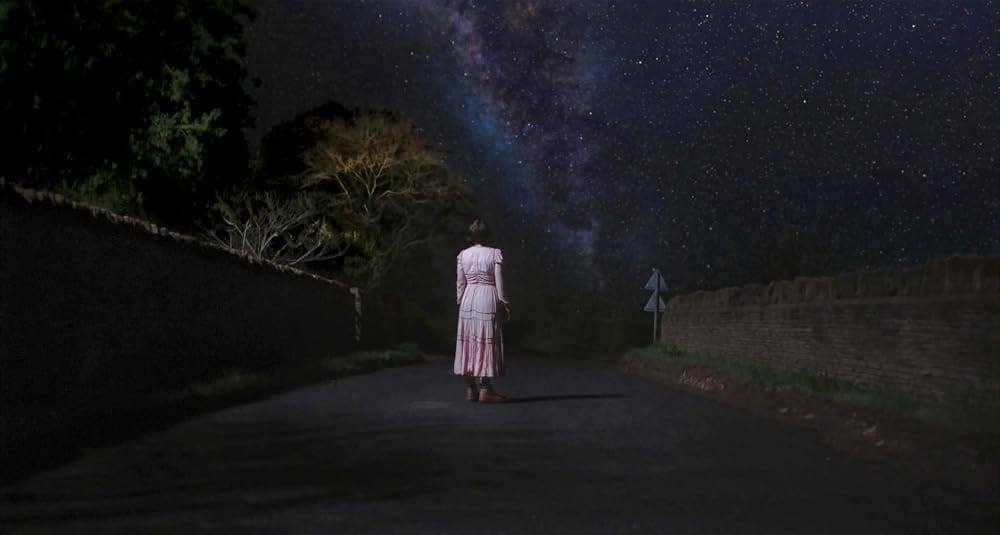
Jessica: The sequence where Harper goes on a walk is perhaps the best thing Garland has ever done. It has a looseness to it, but there is some menace that feels well controlled. The other sequence that really stood out to me is Harper being unknowingly stalked by the naked man through the window, some very nice camera work there that isn’t too jump-scare focused. But I think to the extent the film works it is the actors doing it. Everything about these men that is menacing or not is from Rory Kinnear, who is pretty fantastic even if I hated it. And, of course, Jessie Buckley always commits to the bit.
I have to go back to the birth sequence of it all because this is exactly the kind of provocation without purpose that irks me. As you said, motherhood is almost entirely unmentioned until we start seeing these men who start birthing other men through vaginas that appear in all kinds of places on their bodies. But each time we must zoom in, we must see it up close, and then just as we get a break from it we are starting up again on the next man. It is almost scary to see Riley from the neck down once she comes on screen because there’s still this lingering connection! If you’re going to be so hallucinogenic and detached from reality, why this focus on the moment of birth? Why not have one man tear through the other’s skin? You could do all kinds of different things to have this sequence of one man begetting another, but this is what he decided, and it puts my hackles up.
I really wish we had a moment at the end of the film to see where Harper is at the end of all this. I love that moment of her smile, but if you still are reeling from the WTF-ness of the previous sequence, there isn’t enough time for the viewer to process and consider and breathe.
I will acknowledge that, in addition to the performances, I did really enjoy:
- Harper walking in the woods
- Harper stabbing the hand through the mailbox and the ensuing split hand
So now I ask you: what were the things you didn’t like?
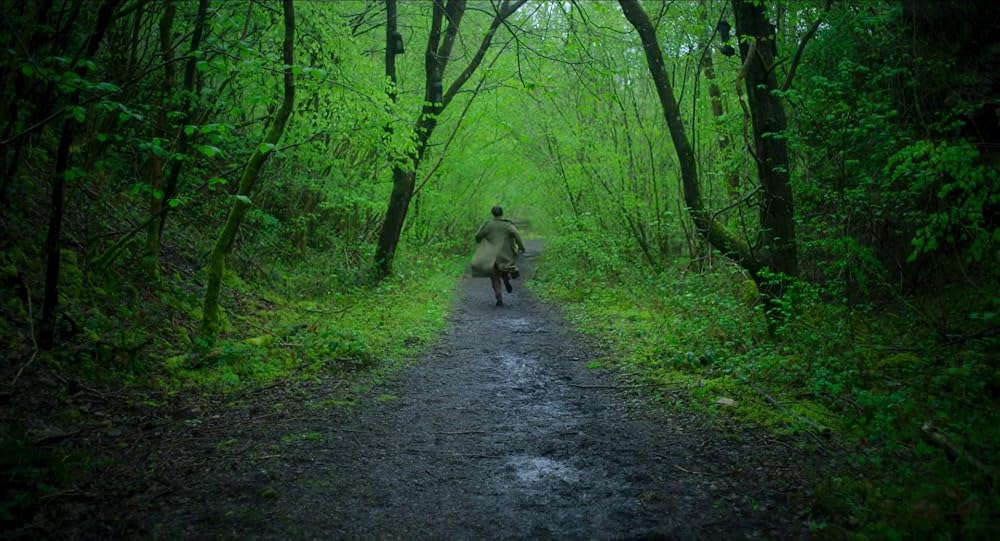
Emily: God, I love that walk in the woods. The lushness and the greenness, and the unshielded joy we see on Harper’s face when she shelters from the rain under a tree—it’s so beautiful. And to puncture it with the appearance of the naked man at the other end of that railway tunnel, who answers Harper’s whimsical improvised song with his own foxlike screams—it gives me chills every time.
Not to get too deep into the weeds on a tangent here, but the UK has a long and passionate history surrounding land access and right to roam policies. My mom was born in England, and I spent a fair amount of time there while I was growing up, and some of my fondest memories are of wandering across the fields with my great aunt and her dogs and feeling like we could go anywhere we wanted, determined only by our own whims. And there is a real strangeness to the English countryside that’s sort of hard to define—folk horror, which has its origins in the UK, grapples a lot with this intangible eeriness, and I appreciate that Garland is tapping into that here as well. This, to me, is another example of the contrasts he plays with in this movie: Harper has this peace and this freedom in nature, but like any woman, she has to balance that freedom with the risk of encountering someone who might mean her harm.
I love the color work here too—the intensely saturated green of the countryside, the oppressive, almost uterine, orange-red of Harper’s apartment during the James flashbacks, the soft feminine greens and browns and pinks of Harper’s wardrobe.
And yeah, the split hand is one of my favorite bits of movie gore in recent memory. The way he slowly draaags his hand back through the mail slot is viscerally upsetting and had me shrieking.
As for what I didn’t like… I think my main issue is balance. I don’t mind ambiguity in storytelling, but I do think the audience should understand why the story is ambiguous. The ending of Tana French’s In the Woods comes to mind: the present day mystery is solved, but we never get an answer to what happened to Rob and his friends when they were children, because, well, sometimes that’s how life goes. You don’t always get a satisfying answer! It’s a divisive book for that reason, but I think French’s intention is clear. With Garland, the balance of plot and vibes is a little skewed toward vibes. Personally, I don’t mind that, but I understand why other people do—I’ve joked before that I’m the only person on earth who likes this movie, which of course, isn’t strictly true, but I know I’m mostly an outlier here. I could’ve used maybe one more point of context on the pregnancy/birth plot thread, and I could’ve used like 15% more clarity on what’s happening in the climactic confrontation scene. We see the naked man blow a cloud of dandelion fluff towards Harper, and the camera is very deliberate in showing us that she inhales one of the floating seeds. Is that tied into the pregnancy and birth imagery? Is it meant to function like a hallucinogen and that’s why Harper seems so strangely accepting of this swirling assault? I’m not sure.
But for me, Men functions more as a tone poem or a close psychological character study than a plot-driven story, and viewed through that lens, it works perfectly.
Jessica: Men, always trying to pollinate you.
In these Let Them Fight conversations, I think the most important thing is for us to engage with respect and curiosity. The second most important thing is for the minority opinion to get a chance to make its case. This time you’re definitely the minority opinion (Men had decidedly mixed reviews from critics and 2.8 stars on Letterboxd), since even positive reviews of the film tend to be mild. Your whole-hearted endorsement was strong enough to get me to watch this film AGAIN, knowing I already hated it. I can’t exactly encourage people to go watch it, but I can see where you’re coming from, and I think it may make some reconsider their take.
Maybe someday Alex Garland will go for clarity over repeatedly poking the audience with a stick, but until then I’ll happily fight with you about him!
Comments ()