
Let Them Fight: Incidents Around the House
To Daddo or to Daddon't? That is... well, it's certainly *a* question.
Welcome! You’ve come to Darker Times during a strange and special time: 💫 the Darker Times Subscriber Drive 💫. We’re trying to hit 500 paid subscribers by August 14th or else we will all be hunted down and skinned alive in our beds. Ha! We kid. But not really. To keep Darker Times running, we need money—hot, wet, bloody money—to keep the lights on and the words flowing. If you like this post or even if you hate it, consider subscribing in exchange for great, funny, analytical horror coverage.
We partner with Bookshop for all our book links. Any purchase you make through our links help support Darker Times.
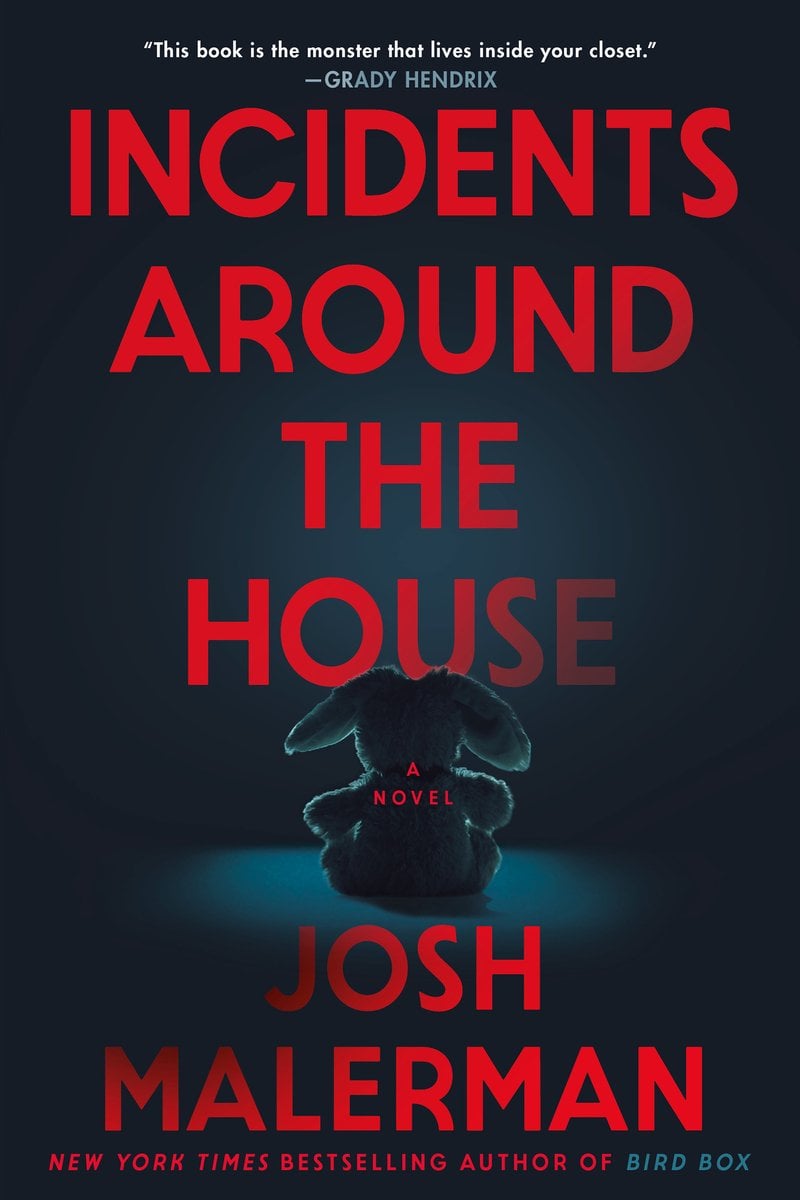
Welcome back to Let Them Fight, a recurring feature where we have a civil, measured, text-based cage match about a work of art we disagree on. This time, Anna and Emily debate narrative POV, childhood nightmares, and the nickname “Daddo” in Josh Malerman’s Incidents Around the House (2024).
Incidents Around the House is on the brink of reaching a much larger audience: director Rob Savage’s forthcoming adaptation, Other Mommy, hits theaters this October, and the trailer is currently scaring the pants off unsuspecting moviegoers who thought they were sitting down for a normal screening of Christopher Nolan’s The Odyssey. So what better time to for us to revisit Malerman’s source text?
Trailer for Other Mommy, the film based on Incidents Around the House
Fair warning: spoilers follow for Incidents Around the House (and, probably, Other Mommy).
Emily: Okay, right up front: I do not like this book. I didn’t like it when I read it in 2024, and I didn’t like it when I re-read it this past week. I have been continually baffled by people’s claims that it’s the scariest book they’ve ever read. And I say this as a Josh Malerman fan! Bird Box rearranged my neural pathways when I first read it.
It’d be one thing if Incidents Around the House merely left me cold, but instead I find it actively offputting. We’ll dig further into the why as this conversation goes on, but the big insurmountable issue for me is that the entire book is written from the point of view (POV) of, and in the voice of, an eight year-old girl. So, Anna, I know you like Incidents very much (and please do tell us why!), but my big question: Is the Bela POV something you actively enjoy, or do you like the book in spite of it?
Anna: Okay, I read this as an ARC (advanced reader copy) back in 2024, and it was maybe only the second or third Malerman that I had read? His previous book, Daphne, had a chapter that rattled me to my core that talked about anxiety and not knowing what to do with yourself when you realize how big the world is. That being said, I was a Malerman fan going into Incidents which certainly helped. But I was genuinely afraid when I read it! I did read it late at night, and I also read it during a whole week where my now-husband had the flu. It was just me and my dog, staring down the guest room closet where, theoretically, Other Mommy could get me (I was staying in there so as to not get said flu). I remember the reading experience so vividly for those reasons, and I wonder if that had something to do with it.
I didn’t have an issue slipping into Bela’s POV. A lot of people have talked about how it’s hard to adjust to a child’s voice and perspective, but I am absolutely terrified of children. So getting all of these descriptions from Bela, the hazy, nightmarish quality of her observations, is what really got to me. There is one scene where Other Mommy leans around a doorway that scared the shit out of me. I HATE things that peek around a corner. It shows a level of curious intelligence that says that being knows it shouldn’t be seen, but it wants to see. It gets me every time!
Looking back though, I do think Bela’s eventual understanding of things is hard to buy into. And I don’t necessarily love the method of villainization of a mother figure. BUT, people can be fundamentally flawed and complicated. I found Ursula’s, Bela’s mom’s, truth to kind of have that sharpness of a coming-of-age narrative for Bela that really spoke to me at the time. How realistic all this is, I don’t know.
Okay, that’s my opening argument. I rest my case. For now.
Emily: The context in which you first encounter a story matters SO much, that makes a lot of sense to me! (I read the Children’s Museum section of Keith Rosson’s Coffin Moon while I had a cold and was up at 4 AM with congestion-related insomnia and it fucked! me! up!) And I do like how flawed Ursula and Russ are as parents—more on that later. But I gotta spend some time on the prose and the voice here first.
I can understand why writing from a child’s POV might be an appealing challenge for a writer—you’re setting limitations for yourself regarding what your POV character knows and understands about the world around them, what kind of vocabulary they have, how they can express themselves, and so on. And if you’re writing a novel for adult readers, you’re also trying to figure out how to communicate adult themes and concerns to those readers in a way that’s consistent with your narrator’s age and circumstances. And that’s hard! There’s a reason you don’t see more of it.
But it just doesn’t work for me here. I try to be a generous reader, but there are almost too many moments to count in this novel where I’d get hung up on the use of a word that I didn’t think Bela would know, or a way of describing a complex emotion or relationship that just doesn’t ring true. When it comes to recounting action, Bela’s narration gets pedantic and plodding: And then Mommy came down the stairs, and then Daddo went to the door, and then I looked at the ceiling, and then, and then, and then … Bela’s voice is pure nails on a chalkboard for me. (As an aside: the first time I read this book was on the page, and when I went to pick it up again last week, I decided to go for the audiobook in the hope that listening to a narrator read Bela’s perspective aloud might get me around my dislike. I don’t know why it didn’t occur to me, but of course the audiobook narrator is a teenager doing a little girl voice, which made me go full Mourinho ripping off my headphones.)
Also: the fact that Bela calls Russ “Daddo,” and that you have to read the word “Daddo” approximately 5-8 times per page for 400 pages … I felt like a cat who’d had all the fur on my body rubbed the wrong way.
Anna: Okay first of all, you need a medal for surviving the kid’s museum scene from Coffin Moon while ill. Bravo, for real, that shit was harrowing.
But back to Incidents, I totally agree with you on the challenge of writing from a child’s voice. I can’t fathom doing it myself, and considering the very little time I have spent around kids, I think I would be asking for a lobotomy if I were trying to emulate a child for this long of a narrative.
That being said, for some reason, Bela’s voice just didn’t bother me that much. And I have really tried to interrogate why that is—you are not the first person to share this sentiment with me. And, by all accounts, it should have driven me mad! As I said, I am not a kid person!
The answer I have settled on is my love for confusion and ambiguity. Sometimes, I really love a straightforward story with all the answers and little wonder. But approaching a story like this in a way that made me think about my own childhood fears just worked for me? In a way that got me past the voice, anyway.
I think in Bela’s limited vocabulary, I filled in the blanks of how much worse it probably actually was. For instance, there’s a scene on a beach, and Other Mommy is relentlessly pursuing this family (that’s a whole other thing that pushes my buttons, relentless pursuit like in Terminator or When the Wolf Comes Home, I like to rest too much for that shit). Bela describes Other Mommy moving down the beach towards them in a weird dog-like fashion because that’s the only way she can describe it. And in my head, I think about how a dog’s legs are bent backwards compared to our knee joints and how their hackles rise in ways a human can't. To me, the thing implied on the page from the limited worldview was much more terrifying than anything else. There was no way to ever know if my imaginings of these were correct. But, I do know it frightened me greatly.
I am curious, though, if this book frightened you at all, even with these things that you experienced while in Bela’s POV?
Emily: I wouldn’t say it frightened me—I found it creepy in places (the scene where Bela gets up to use the bathroom and realizes, as she’s sitting on the toilet, that she’s actually sitting on Other Mommy’s lap? Good shit!), and it’s certainly a very bleak story, but I never had that stomach-clenching “oh my GOD” moment with this book. I think some of that is down to my issues with the voice—I was too annoyed at reading “Daddo” for the 28374th time to really let it get under my skin—but a lot of it is that it’s really, truly rare for me to be terrified by a story on the page. Creeped out, disturbed, unsettled, yes, but not out-and-out scared.
Beyond the voice, there were a few other elements of this book that pushed me out of the narrative. A big one is the device where, early on in the novel, both Russ and Ursula deliver confessional monologues about their Big Complicated Adult Feelings to Bela while they think she’s asleep. I don’t have kids, but I’ve mentioned this to a number of parent friends, all of whom pulled some kind of face and said something along the lines of “why on earth would anyone risk waking their kid up like that?” I feel the same way about the climactic scene where Ursula tells Bela the original sin behind their little family in an attempt to rid Bela of her “innocence” (eesh) and thereby remove the thing that Other Mommy is attracted to. It didn’t make sense as something these two adults would take seriously as a solution; it made sense to me only as a narrative excuse for Malerman to deliver the reveal of Bela’s paternity.
Actually, on that note, let’s talk about Russ and Ursula. Russ is clearly the “good” parent, attentive and honest and down to earth (Jay Duplass is flawless casting for movie Russ, I have to say). And I actually think Ursula’s unlikability is one of the more interesting elements of the story—she gets to be thorny and flawed and resentful in a way we don’t often see with mothers in fiction. But I know a lot of readers had a very strong negative reaction to the parents here—what did you think?
Anna: I think that’s very fair. The whole thing about talking in front of a sleeping Bela does read as suspect, but in my head, I remembered all the times I was a kid and played possum (is that a Southern thing?) when I fell asleep in the car and heard conversations not meant for me (SORRY, MOM AND DAD). To explicitly place those situations in front of Bela without that kind of context doesn’t really hold up, but again, I think I injected a bit of kid-Anna into all this.
I also don’t have kids so I’m basically taking Malerman at his word with this book. I don’t have anything to argue with or against other than my own childhood experiences, but I don’t doubt I would be extremely critical if I did have kids.
I agree on the innocence narrative not making total sense. This was another thing I took in stride because of Bela’s limited understanding of things. It made me think of a very real child predator where innocence is exactly what that kind of person would be looking for. Another reason my fear was a little intense on this first read.
And as far as the scares go, totally fair. The bathroom scene also got me, and there was a point where my house creaked really loud while I was reading … that sent me nearly flying out of bed. I think this is where the context of my reading really impacted the experience.
 Josh Malerman
But to Ursula and Russ, I loved the complexity of them. I loved the commentary around stereotypes for certain genders with parents, the role of “fun” parent and disciplinarian, all of that good stuff. And I also really loved Ursula’s complexity. I think there’s something really compelling in her attitudes and outlook that we normally push away—I’d much rather talk about how hard having a child is.
AND! Since you brought up the movie, I’ve seen some discourse online about making Other Mommy actually look the same as Ursula (Jessica Chastain, WHO LOOKS TO HAVE DONE A PHENOMENAL JOB WITH THE ROLE). Do you have any thoughts on that creative choice?
Emily: I’d almost say Ursula veers too close to irredeemable, honestly. That section where she just disappears for a couple days while her kid is in peril? That feels close to unforgivable to me (again, with the caveat that judging other people’s parenting choices when you’re not a parent is always a dangerous game). At the same time, I do think it’s important to represent a broader range of parenting experiences in fiction. Parents, especially mothers, are held to an impossibly high standard and often expected to forfeit their own personhood, and that’s hard and it sucks and it’s worth examining the effect that has on someone. But I also don’t know if the best way to undertake that examination is through a child’s eyes—given the reader reactions I mentioned earlier, I think you risk undermining your point about the double bind of motherhood because readers might not be able to get over Ursula saying something like, I never wanted to watch my own kid, I wanted to be at the club, right in front of Bela.
And if you’re asking if I, Emily Hughes, have opinions about an adaptation choice? OH BOY have you come to the right place.
So I’m generally pretty optimistic about Other Mommy, Rob Savage’s forthcoming adaptation, which is currently getting a lot of buzz due to its extremely creepy trailer. Due to the way narrative point of view works on the page vs. on screen, a film adaptation liberates us from the strict internal experience of Bela’s perspective, which I’m hoping will give me a new way into this story. But to your point about the film’s version of Other Mommy: Malerman very pointedly avoids giving us a physical description of Other Mommy on the page beyond a couple key characteristics. She has dark hair on her body, and she has a fairly hazy grasp on where her body parts should be in relation to each other at any given moment.
In the adaptation, Savage has given us a version of Other Mommy that looks exactly like Ursula. I’m not mad about that—it’ll certainly give Chastain a lot of opportunity to stretch her legs, performancewise—but it does change some of the subtleties of the story. On the page, Bela pretty much always knows when she’s talking to Other Mommy. Other Mommy can sometimes appear in the guise of Bela’s other family members, but the way Malerman describes this is sort of hazy in the manner of a childhood dream, and there’s usually some detail that gives Other Mommy away—her distinctive smell, or dark hair where dark hair should not be, and so on. In the book, the fear doesn’t come from “am I talking to my mother or just a demon who looks like her,” it comes from, as you pointed out earlier, that relentlessness, that inescapability. Other Mommy just keeps coming. If the thrust of the film is that Bela doesn’t necessarily know which Mommy she’s interacting with, that’s not necessarily better or worse, it’s just different, and I’m interested to see what Savage does with that. You?
Anna: Your take on perspective is a really good point. And if I remember correctly, I read Incidents and then picked up Rachel Yoder’s Nightbitch not long after. I was able to get that kind of commentary on the complexities of motherhood in a way that didn’t veer into that irredeemable territory. Making this comparison may be like apples and oranges, but I think concerning perspective, Nightbitch, written from a mother’s perspective, understands that assignment more realistically.
But I too am very hesitant to judge any kind of parenting as I am not one!
I totally agree on how this presentation in the film would make for a different kind of story altogether. What makes me really excited about it is the thematic question of if you can ever really escape your parents. I think for me, as I get older, and I catch myself doing the same things that made me cringe once upon a time when my parents did them, there’s some really rich ground for horror in the pre-determinism of that setup. And will you ever know if you’ve broken a family cycle? Will you ever really get away from the things that frighten you? That gives me a different kind of existential dread.
The only thing that worries me is the idea that the depth of that theme may get lost in the jump scares. The one we see in the trailer fully “got me,” but it makes me wonder how many scenes like that there are. Are they tipping their hand too soon? Will they lean too far into the gimmicky side of things? I don’t know. I’m optimistic and excited, but also slightly cautious.
The one thing I will say that I do really love about the novel that seems to be incorporated into the film as well is that Other Mommy is not just visible to Bela. I get so frustrated sometimes when a character isn’t believed in horror, and to take that element away to explore other themes works a lot for me. It’s a newer game with a different set of rules that I enjoy very much. But of course, curious about your thoughts on these things!
Emily: I’m not super worried about the jump scare issue (the instantly-memed one in the trailer made me gasp and then laugh), mostly because I think this is exactly the kind of story where they work well. One thing that does reliably scare me (and a lot of other people, given how common it is in horror) is the idea of something in your house that should not be in your house, whether that’s Other Mommy or a weird wooden golem or a fucked-up little guy in a hat or Toni Collette on your ceiling, and I think that exact juxtaposition is the perfect growing medium for an organically earned jump scare.
I really like your point about family cycles! I think the movie has the opportunity to give Grandma Ruth a meatier role (especially as she’s going to be played by the great Karen Allen), which could lend some more heft to the family drama at play behind the scares.
I don’t know. I like liking things, and I always go into a new book or movie hoping it’ll work for me. Maybe the movie will be a “third time’s a charm” moment for me with this story? Here’s hoping.

Comments ()